
Ultra Premium Olive Oil
Olive Oil Soap vs Body Wash for Your Skin
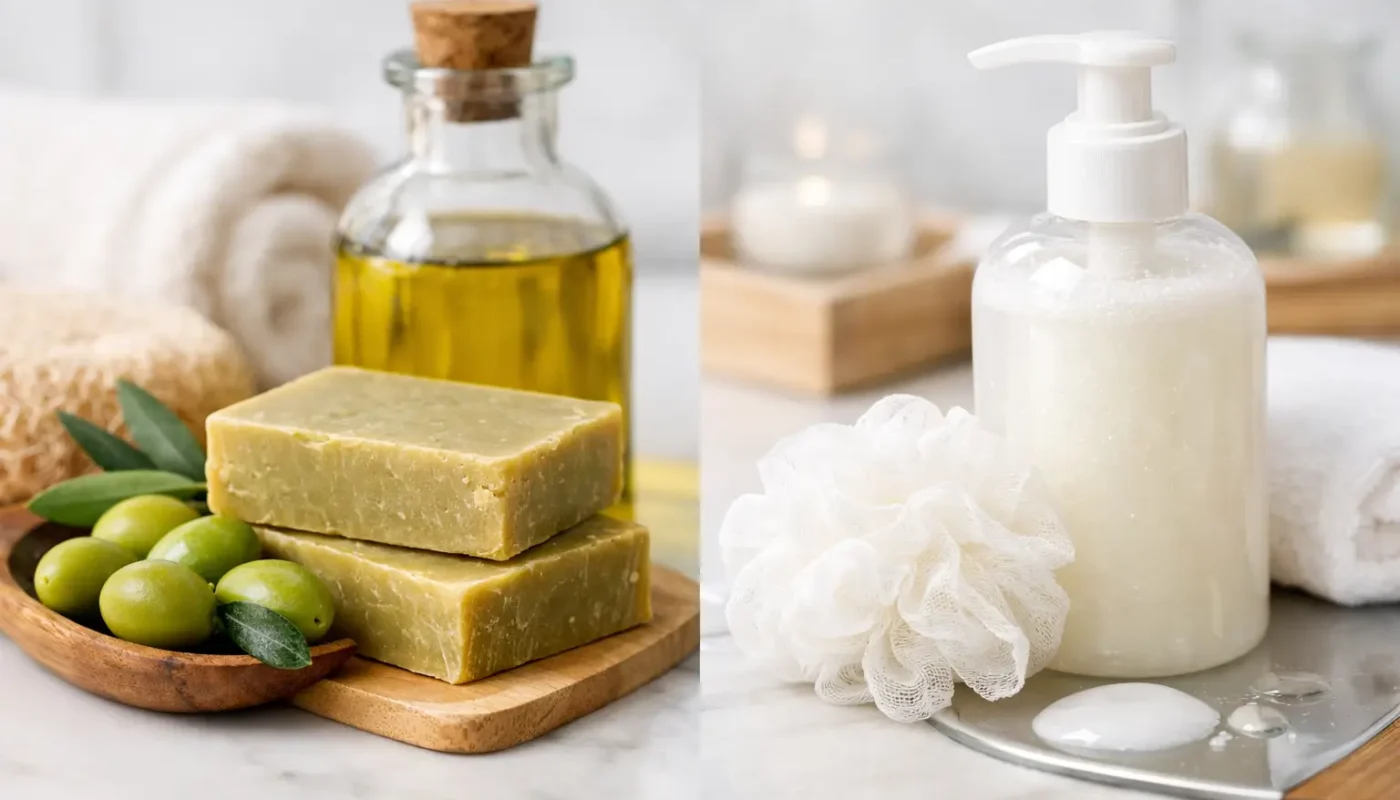
Jul
A shower product can feel luxurious long before you know whether it truly suits your skin. In the question of olive oil soap vs body wash, the better choice is not automatically the one with the richest lather, the prettiest bottle, or the word “natural” on the label. It comes down to how it cleanses, what else is in the formula, and how your skin feels an hour after you towel off.
For shoppers who care about ingredient quality in the kitchen and beyond it, olive oil soap has obvious appeal. A well-made bar is simple, long-lasting, and quietly satisfying to use. Body wash, meanwhile, can offer a gentler cleansing system, targeted skin-care ingredients, and a familiar, cushiony foam. Both belong in a thoughtful routine.
Olive Oil Soap vs Body Wash: The Real Difference
Traditional olive oil soap is made by combining olive oil with an alkali, a process called saponification. The finished bar is no longer simply olive oil pressed into soap form. The oil has been transformed into soap, often with naturally produced glycerin remaining in the bar. Depending on the recipe, it may also contain other plant oils, fragrance, botanicals, colorants, or a small amount of extra oil left unsaponified for a more conditioning feel.
Body wash is usually a water-based cleanser built around surfactants. These are cleansing ingredients designed to lift oil, sweat, sunscreen, and everyday grime from the skin so they can rinse away. Because body wash contains water, it also needs preservatives to remain safe and stable. Its formula may include humectants such as glycerin, emollients, fragrance, acids, or active ingredients aimed at concerns like rough texture or body acne.
Neither format is inherently superior. The meaningful distinction is that a traditional soap bar is usually more alkaline, while many body washes are formulated closer to the skin’s naturally acidic surface environment.
What olive oil brings to a soap bar
Olive oil is prized in soapmaking because it creates a mild, creamy bar rather than the very bubbly, sometimes more stripping lather associated with high-coconut-oil recipes. A bar high in olive oil can feel smooth and substantial in the hand, with a soft lather that suits people who prefer a less perfumed, less fussy bathing ritual.
Still, “made with olive oil” does not tell the whole story. One bar may list olive oil first and have a short, thoughtfully chosen ingredient list; another may contain a small amount of olive oil alongside stronger cleansers, heavy fragrance, or dyes. Read the full label rather than treating the olive oil callout as a promise of gentleness.
What body wash does differently
A quality body wash can be exceptionally pleasant for dry or reactive skin because formulators can balance surfactants with moisturizing ingredients. Some use milder cleansing agents and add glycerin to help draw water into the outer layer of skin. Others are intentionally more powerful, which can be helpful after a sweaty workout or for rinsing away water-resistant sunscreen.
The trade-off is that body wash can be easy to overuse. A generous squeeze onto a loofah creates abundant foam, but more product and more friction do not necessarily mean cleaner skin. Fragrance-rich formulas can also be a problem for people who are sensitive to scented products, whether the scent comes from fragrance blends or essential oils.
Which One Works Best for Your Skin?
If your skin is generally balanced and you enjoy a classic bar, olive oil soap can be a beautiful everyday choice. Look for a bar that feels creamy rather than aggressively squeaky-clean and allow it to dry fully between uses. The simple act of keeping a bar out of standing water helps it last longer and keeps the experience more enjoyable.
For very dry, eczema-prone, or easily irritated skin, body wash may have an advantage, particularly a fragrance-free formula made with mild surfactants and humectants. Traditional soap’s higher pH can temporarily disrupt the skin barrier for some people, especially when used frequently with hot water. That does not mean every olive oil soap bar will cause trouble, but it does mean your skin’s response matters more than a product category’s reputation.
If you have body acne, the answer depends on the formula and the location of the concern. A simple olive oil soap may be perfectly fine for the rest of the body, while a body wash with a proven acne-focused active may be more appropriate for the chest or back. If breakouts, itching, or scaling persist, a dermatologist can help separate a product reaction from a skin condition that needs specific treatment.
Sensitive skin also calls for a closer look at fragrance. Olive oil soap can smell naturally mild, but artisan bars are often scented with essential oils or fragrance. Those additions can be lovely, yet they are not always gentle. The same is true of body wash. When sensitivity is a concern, choose the least complicated formula that still makes you want to use it consistently.
Choose by Routine, Not by Hype
Your bathing habits should guide the decision. A bar of olive oil soap is compact, travel-friendly, and typically creates less packaging waste than a plastic bottle. It also makes a thoughtful addition to a guest bath or gift basket, especially for someone who appreciates the enduring craft of a well-made soap.
Body wash may be more convenient for shared showers, children, or anyone who prefers dispensing product without handling a wet bar. A pump bottle can also be the more hygienic option in a household where a soap bar would sit in pooled water or be used by several people.
Consider your water, too. In hard-water areas, true soap can react with minerals and leave a film on skin or shower surfaces. If your bar suddenly seems less pleasant after a move, the water may be part of the story. A body wash made with synthetic surfactants is less likely to create soap scum and may rinse more cleanly in hard water.
How to Get Better Results From Either
Water temperature and technique can make as much difference as the cleanser itself. Use warm, not hot, water. Focus cleanser on areas that genuinely need it, such as underarms, feet, groin, and skin folds. Arms and legs often need far less cleansing unless they are visibly soiled or coated in sunscreen.
With olive oil soap, work the bar between wet hands or on a soft washcloth, then apply the lather to skin. Avoid leaving the bar under the spray. With body wash, start with a small amount, about the size of a nickel, and add more only if needed. Rough scrubs and harsh mesh poufs can turn even a gentle formula into an irritating routine.
After either choice, pat skin dry and apply moisturizer while it is still slightly damp. This is especially worthwhile in cold, dry weather, when indoor heat and long showers can leave skin feeling tight regardless of the cleanser you use.
A Quick Ingredient Check Before You Buy
For olive oil soap, look for a clear ingredient list and consider what you want to avoid: strong fragrance, dyes, or a long roster of extras that do not serve your skin. If you enjoy a scented bar, choose the aroma for pleasure, not because it claims to solve a skin concern.
For body wash, look beyond the front-label claims. “Natural,” “clean,” and “dermatologist tested” can be useful marketing language, but they do not replace an ingredient list. If dryness is your concern, glycerin and other moisturizing ingredients are often welcome. If you react to fragrance, seek fragrance-free rather than merely unscented, since unscented products can still use fragrance to mask an ingredient’s natural odor.
The best shower staple is the one that leaves your skin comfortable, your routine uncomplicated, and your bathroom stocked with a product you genuinely look forward to using. A finely made olive oil soap can make an ordinary shower feel wonderfully grounded, while the right body wash can provide tailored comfort when skin needs extra care. Let the label guide you, then let your skin have the final word.
