
Ultra Premium Olive Oil
How to Use Finishing Vinegar at Every Meal
Jul
A roasted carrot can be perfectly tender, deeply caramelized, and still taste like it needs something. Often, that something is not more salt or another five minutes in the oven. It is a few drops of vinegar added at the very end. Learning how to use finishing vinegar gives home cooks one of the simplest ways to make everyday food taste more vivid, balanced, and complete.
Finishing vinegar is used after cooking or just before serving, when its acidity and aroma are at their most expressive. Unlike vinegar stirred into a braise, simmered into a sauce, or whisked into a marinade, it is not meant to disappear into the background. It should be tasted – a bright lift on a grilled peach, a sweet-tart contrast against creamy cheese, or a tangy final note on a bowl of soup.
What Makes a Vinegar a Finishing Vinegar?
“Finishing vinegar” describes a use more than one strict product category. A well-made balsamic vinegar, white balsamic, Champagne-style vinegar, apple cider vinegar, sherry vinegar, or fruit vinegar can all earn a place at the table if they have pleasing acidity and enough flavor to bring to a finished dish.
The best choices have balance. They may be crisp and clean, rounded with natural sweetness, or layered with notes of fruit, oak, herbs, and spice. A mass-market distilled white vinegar has plenty of acidity, but its sharp profile rarely contributes the depth you want in a final flourish. Save it for pickling and household tasks. For finishing, choose a vinegar you would be happy to taste from a spoon.
Premium balsamic vinegars are especially versatile because their sweetness softens acidity without making a dish sugary. Dark balsamic can bring raisin, fig, or cooked-grape character to richer foods. White balsamic is brighter in appearance and often lighter in flavor, making it a beautiful match for pale sauces, seafood, fresh fruit, and delicate vegetables.
How to Use Finishing Vinegar Without Overdoing It
The key is restraint. Finishing vinegar should sharpen flavor, not make the dish taste sour. Start with a few drops or about 1/4 teaspoon per serving, toss or stir, and taste before adding more. With a large platter of vegetables or a four-serving salad, begin with 1 to 2 teaspoons.
Add it after the heat is off. A warm dish can receive vinegar immediately before serving, but avoid boiling it unless your goal is to cook the acidity into a sauce. High heat mutes delicate fruit and floral notes, which are often the very reason to choose a specialty vinegar.
Think of finishing vinegar as one member of a small finishing team. Salt makes flavors clearer, extra virgin olive oil adds body and aroma, fresh herbs bring green freshness, and vinegar supplies lift. If your food tastes flat, taste it first. It may need salt, richness, or a little sweetness rather than more acid.
Use the contrast already on the plate
Pairing becomes easier when you look for contrast. Rich, fatty, creamy, sweet, and roasted foods welcome a brighter vinegar. Delicate fish, watery vegetables, and subtly seasoned dishes generally need a lighter hand and a gentler style.
A dark berry or fig balsamic can stand up to pork, lamb, roasted squash, and blue cheese. A citrus-forward or herb-infused white balsamic is more at home with shrimp, chicken, cucumber, goat cheese, and spring greens. This is guidance, not a rulebook. The right pairing is the one that makes you want another bite.
Finishing Vinegar for Vegetables and Salads
Vegetables are where this technique becomes a weeknight habit. Roast broccoli until its edges char, then toss it with extra virgin olive oil, flaky salt, and a small splash of lemon or garlic-infused white balsamic. The vinegar highlights the broccoli’s sweetness and keeps the dish from feeling heavy.
For roasted carrots, beets, sweet potatoes, or winter squash, reach for a dark balsamic with a naturally mellow profile. Add it after roasting, not before, so its flavor stays distinct. A final sprinkle of toasted nuts, crumbled feta, or fresh herbs turns the same method into a side dish worthy of company.
Salads benefit from a slightly different approach. Here, vinegar is often part of the dressing rather than the final touch alone. Start with roughly three parts extra virgin olive oil to one part vinegar, then season with salt and pepper. Taste a leaf before serving. If the dressing seems dull, add a few more drops of vinegar directly over the tossed greens rather than making the entire bowl overly acidic.
Try white balsamic on arugula with pear and shaved Parmesan, or a pomegranate-style balsamic with mixed greens, walnuts, and goat cheese. The vinegar should connect the ingredients, not hide them.
Finish Meat, Seafood, and Eggs with Brightness
A few drops of vinegar can do for a rich protein what a squeeze of citrus often does, with more complexity and less juice. Brush grilled chicken with a mild balsamic after it rests, or finish pork tenderloin with a fruity dark balsamic and a spoonful of pan juices. The vinegar cuts through the savory crust while preserving the meat’s natural richness.
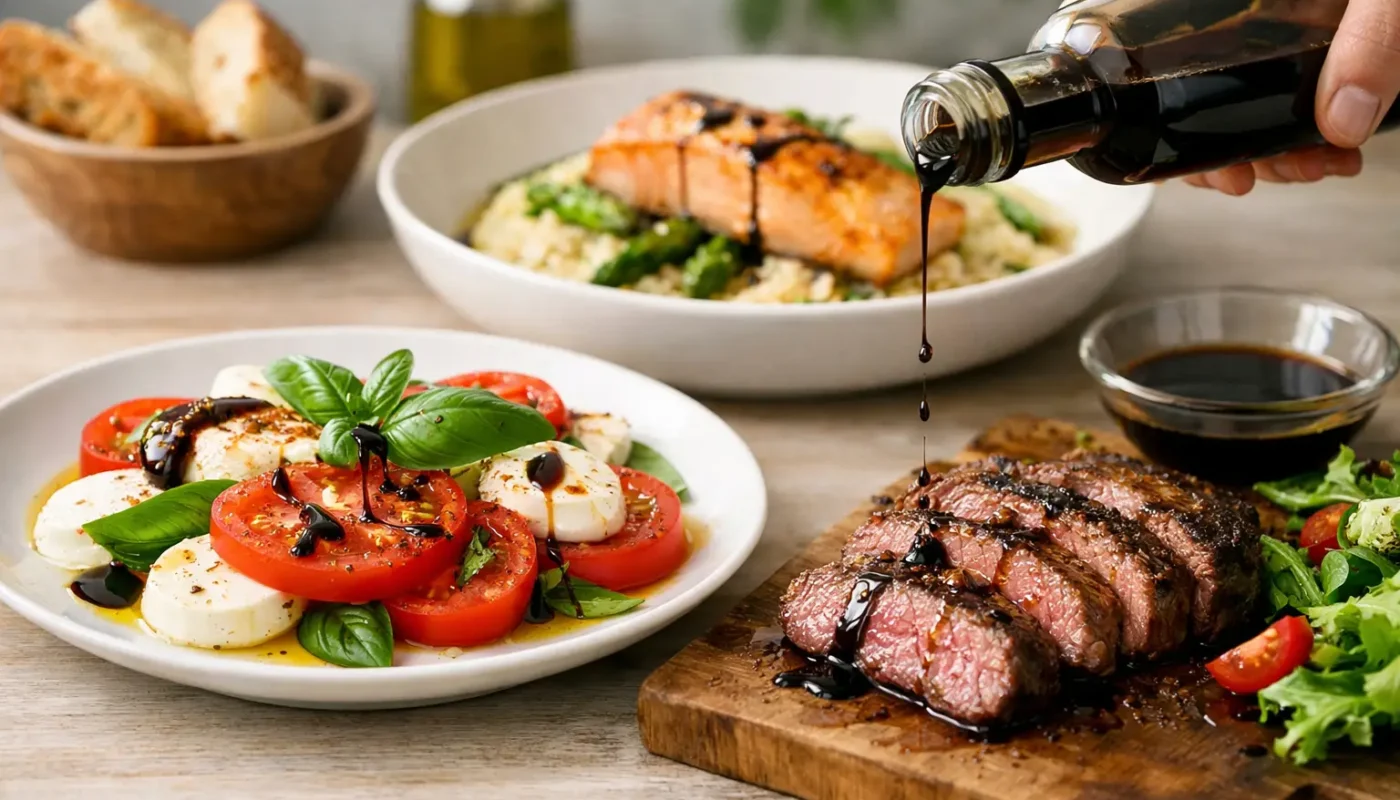
For steak, choose a full-bodied balsamic sparingly. Too much sweetness can compete with the beef, especially if the meal already includes a sweet glaze or sauce. A restrained drizzle over sliced steak, mushrooms, and a peppery salad is usually enough.
Seafood asks for a gentler touch. A white balsamic with citrus, herbs, or a clean apple profile can brighten grilled salmon, seared scallops, or flaky white fish. Add it after plating, ideally alongside a good extra virgin olive oil. The oil gives the vinegar a soft landing and carries its aroma across the dish.
Eggs are another easy place to practice. Drizzle a little vinegar over fried eggs, a vegetable frittata, or avocado toast. The contrast makes a simple breakfast feel intentional without adding another complicated component.
Soups, Grains, and Beans Need a Final Taste
Long-cooked foods often lose their sense of freshness as flavors meld. Before serving lentil soup, tomato soup, chili, risotto, or braised beans, stir in a small amount of finishing vinegar and taste again. The result should not announce “vinegar.” It should make the dish taste more like itself.
For soups and stews, begin with 1 teaspoon for a pot that serves four to six people. Add more only after tasting. A dark balsamic works beautifully with tomato-based dishes, mushrooms, and lentils, while white balsamic is a graceful choice for chicken soup, white beans, or vegetable purées.
Grain bowls also benefit from a final acidic note. Toss warm farro, rice, or quinoa with olive oil, herbs, and vinegar before adding vegetables and protein. Because grains absorb flavor, they can handle a little more seasoning than tender greens, but the same principle applies: add gradually.
Do Not Skip Fruit, Cheese, and Dessert
Finishing vinegar belongs on the sweet side of the table, too. A few drops of aged-style balsamic over strawberries, peaches, figs, or vanilla ice cream create a sweet-tart contrast that feels restaurant-worthy while taking almost no effort. Keep the portion small. The fruit should remain the star.
Cheese boards offer another natural pairing. Dark balsamic complements aged Parmesan, nutty cheeses, and blue cheese, while white balsamic can brighten fresh mozzarella, ricotta, and soft goat cheese. Add the vinegar to a small dish for dipping or drizzle it lightly over a composed bite with fruit and nuts.
If you are serving guests, set out one exceptional finishing vinegar next to the olive oil, salt, and pepper. It invites people to taste, experiment, and discover their own favorite pairing.
Common Mistakes to Avoid
The most common mistake is treating finishing vinegar like a heavy sauce. A thick balsamic may look luxurious when poured generously, but too much can overwhelm a dish and cover the ingredients you carefully prepared. Drizzle lightly, then taste.
Another misstep is using a sweet vinegar on a plate that is already sweet. Honey-roasted vegetables, barbecue sauce, sweet corn, and ripe fruit may need a sharper vinegar or less of it. Conversely, a deeply savory, salty dish may benefit from the gentle sweetness of a quality balsamic.
Finally, do not reserve your best vinegar only for special occasions. Fresh, flavorful pantry staples are meant to be enjoyed. Keep a bottle within reach and use it in small amounts often. With every final drop, you will build a more confident sense of balance – and a more delicious table.
