
Ultra Premium Olive Oil
What Is the Best Finishing Salt for Steak?
Jul
A steak can be beautifully seared, properly rested, and cooked to the exact temperature you wanted, yet still taste slightly flat until the final pinch. The best finishing salt for steak is not necessarily the saltiest or most expensive one. It is the salt whose crystal shape, texture, and mineral character sharpen the beef’s flavor without hiding the work you put into cooking it.
That last-minute seasoning is a small ritual with a big payoff. A few visible flakes catch the light on a sliced ribeye, add a delicate crunch to tender filet, and make the savory richness of a strip steak feel more defined. Choose well, and salt becomes part of the experience rather than an afterthought.
What Makes a Salt Good for Finishing Steak?
Finishing salt is applied after cooking, usually while the steak rests or just before it reaches the table. Unlike the fine kosher salt used to season meat in advance, it is meant to remain distinct. You should see some crystals and occasionally feel a gentle pop between your teeth.
The best choices have irregular, light, or flaky crystals that dissolve gradually on the warm surface of the steak. This gives you moments of bright salinity rather than one uniform salty taste. Fine table salt dissolves too quickly and can make an otherwise excellent steak taste blunt or over-seasoned.
Flavor matters, too. Beef already brings deep umami, browned crust, and rendered fat to the plate. A finishing salt should either provide clean contrast, add a measured mineral note, or introduce a complementary layer such as subtle smoke. It should not compete with the steak’s natural character.
The Best Finishing Salt for Steak Is Usually Flaky Sea Salt
For most steaks, flaky sea salt is the most dependable answer. Its broad, delicate crystals cling to the surface instead of disappearing immediately, delivering a crisp texture and clean burst of flavor. It is especially good on ribeye, New York strip, porterhouse, and flat iron steak, where rich fat benefits from a fresh, saline lift.
Look for a true flaky sea salt with thin, irregular crystals. A pinch goes a long way, so use your fingers rather than a shaker. Sprinkle from a few inches above the steak after it has rested, then slice and taste before adding more.
Flaky salt is also the most versatile option when steak is served with sauces or finishing oils. It plays well with a classic pan sauce, herb butter, roasted garlic, or a small drizzle of fresh extra virgin olive oil. The oil rounds out the beef while the salt keeps every bite lively.
Why texture changes the eating experience
Texture is the reason flaky salt earns its place at the table. The crystals do not simply make food salty. They create contrast against a warm, tender interior and a well-developed crust. On a thick-cut steak, that contrast can make each slice feel more intentional.
There is a practical advantage as well: larger flakes make it easier to control your seasoning. You can scatter a little over the sliced portions and add more only where it is needed. This is far safer than adding another shake of fine salt to the entire steak.
When Smoked Salt Is the Better Choice
Smoked finishing salt can be outstanding with steak, but it is a more specific choice. It brings an aromatic, campfire-like note that suits grilled cuts, especially skirt steak, hanger steak, tri-tip, and flank steak. If the steak was cooked in a cast-iron pan indoors and you want a little suggestion of live-fire flavor, a restrained pinch can be very appealing.
The trade-off is that smoke can easily dominate. A heavily smoked salt may cover the flavor of an excellent dry-aged steak or clash with a peppery crust. Use it lightly, and avoid pairing it with other aggressive smoky ingredients such as chipotle butter, smoked paprika, or a very smoky barbecue sauce.
Smoked salt is most successful when the rest of the plate stays simple. Think grilled steak, charred onions, roasted potatoes, and a bright green vegetable. The salt provides the final aromatic note without turning dinner into a smokehouse imitation.
Coarse Sea Salt and Pink Salt: Good, but Not Always Ideal
Coarse sea salt and pink salt can both finish steak beautifully, particularly if you enjoy a firmer crunch. Their crystals are typically denser and less delicate than flaky salt, so they offer a more pronounced bite. They are often a fine choice for a thick steak with a substantial crust, but they can feel too hard on a tender filet or a thinly sliced skirt steak.
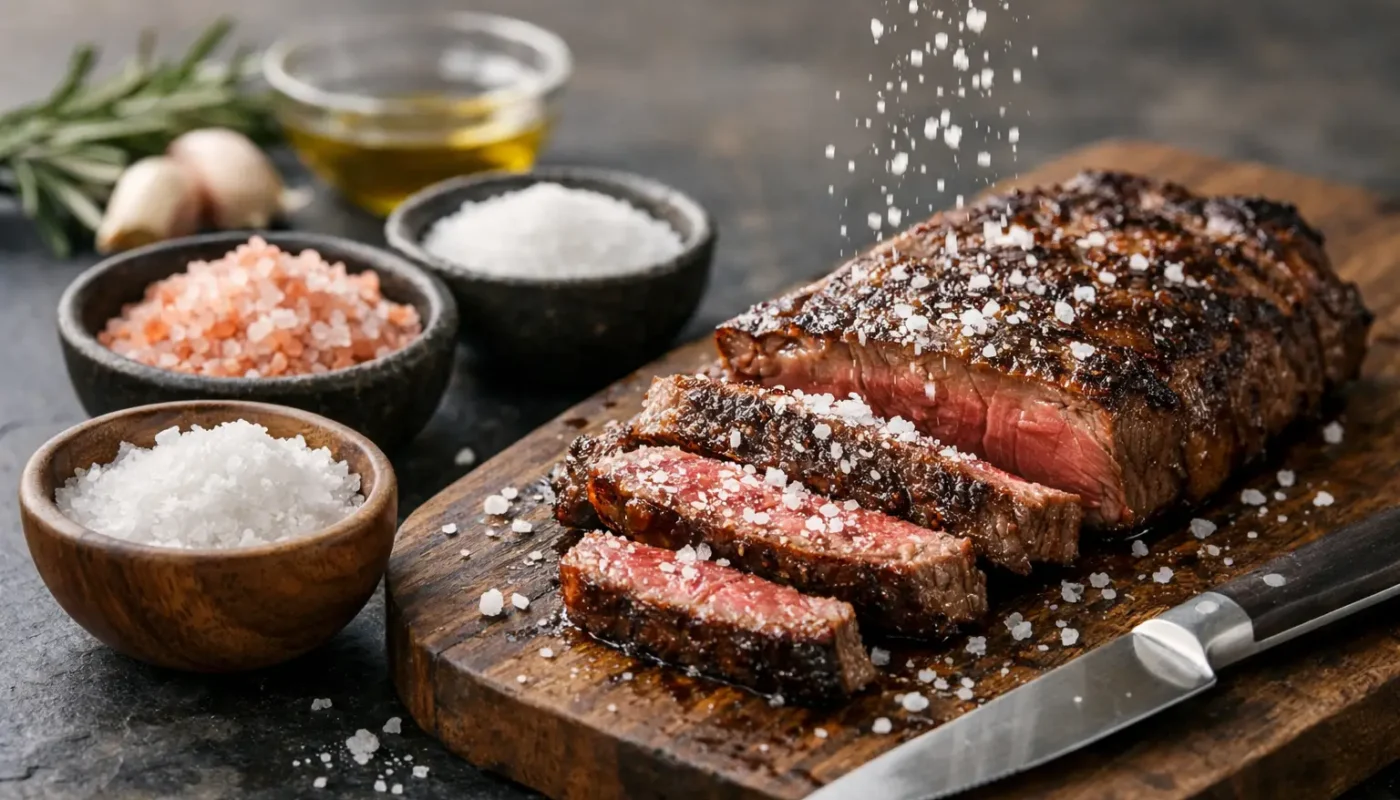
Pink salt is frequently chosen for its color and mineral appeal. Its rosy crystals look lovely against a dark sear, especially on a steak board prepared for guests. Still, the visual effect should be a bonus, not the deciding factor. The differences in trace minerals are subtle in a serving-sized pinch; crystal size and flavor are much more relevant to how the steak tastes.
If you use a coarse salt, crush a few crystals lightly between your fingers before sprinkling. You will keep the attractive texture while avoiding a mouthful of hard, concentrated salt.
Salts to Save for Other Jobs
Not every premium salt belongs on steak. Fine sea salt and kosher salt are excellent for seasoning the meat before cooking, when they can dissolve and work their way into the surface. They are not usually the best finishing choice because they lack the delicate texture that makes a final sprinkle special.
Truffle salt can be delicious with steak, but it is really a flavoring ingredient rather than an all-purpose finishing salt. Reserve it for an indulgent pairing with filet mignon, mushroom risotto, or crisp potatoes. Use only a little, since truffle aroma can quickly overtake the beef.
Lava salt and other dramatic black salts look striking, but their crunch is often quite firm. They can work as a visual accent on a steak platter, though they are rarely as pleasant to eat as a quality flaky salt. Save them for presentation, or blend a few crystals with a more delicate finishing salt.
Match the Salt to the Cut and Cooking Method
A richly marbled ribeye calls for clean flaky sea salt. The salt cuts through rendered fat and keeps the flavor focused. A pepper-crusted strip steak benefits from the same approach, especially if you plan to finish it with a little herb-infused olive oil.
For filet mignon, choose a lighter hand. Filet is tender and refined, and a delicate flake complements its mild flavor better than a large, crunchy crystal. If serving it with a balsamic reduction, use a clean sea salt rather than smoked salt so the sweet-tart sauce and the beef remain in balance.
For grilled skirt steak or flank steak, smoked salt can be a smart choice. These cuts have a more assertive beef flavor and are often served with chimichurri, grilled vegetables, or bold marinades. A small amount of smoke feels natural here, especially when the steak has visible char.
Reverse-seared and sous vide steaks deserve particular attention. Because these methods can create an even interior but a relatively subtle surface seasoning, a finishing salt adds welcome contrast. Sprinkle it after the final sear, not before, so the crystals remain intact.
How Much Finishing Salt Should You Use?
Start with less than you think. For a 12-ounce steak, a generous pinch of flaky salt is usually enough, especially if you salted the steak before cooking. The goal is not to make the exterior taste salty in every bite. It is to create occasional flashes of seasoning that bring out the beef.
Salt after resting, when surface juices have settled but the steak is still hot enough to gently warm the crystals. If you slice the steak before serving, season the cut faces as well as the crust. This distributes flavor more evenly and makes a family-style platter look especially inviting.
Taste with the accompaniments in mind. A salty blue cheese butter, anchovy-based sauce, or heavily seasoned rub may mean the steak needs no finishing salt at all. On the other hand, a simply cooked steak with roasted vegetables and a bright pour of premium extra virgin olive oil often welcomes that final crystalline touch.
At Weyira Olive Oil & Vinegar, we believe the most memorable pantry ingredients earn their place by making everyday cooking feel more considered. Keep a flaky sea salt near the stove, use it with a light hand, and let the next steak you serve reveal just how much pleasure can come from one well-chosen pinch.
