
Ultra Premium Olive Oil
The Best Oils for Homemade Pizza, Explained
Nov
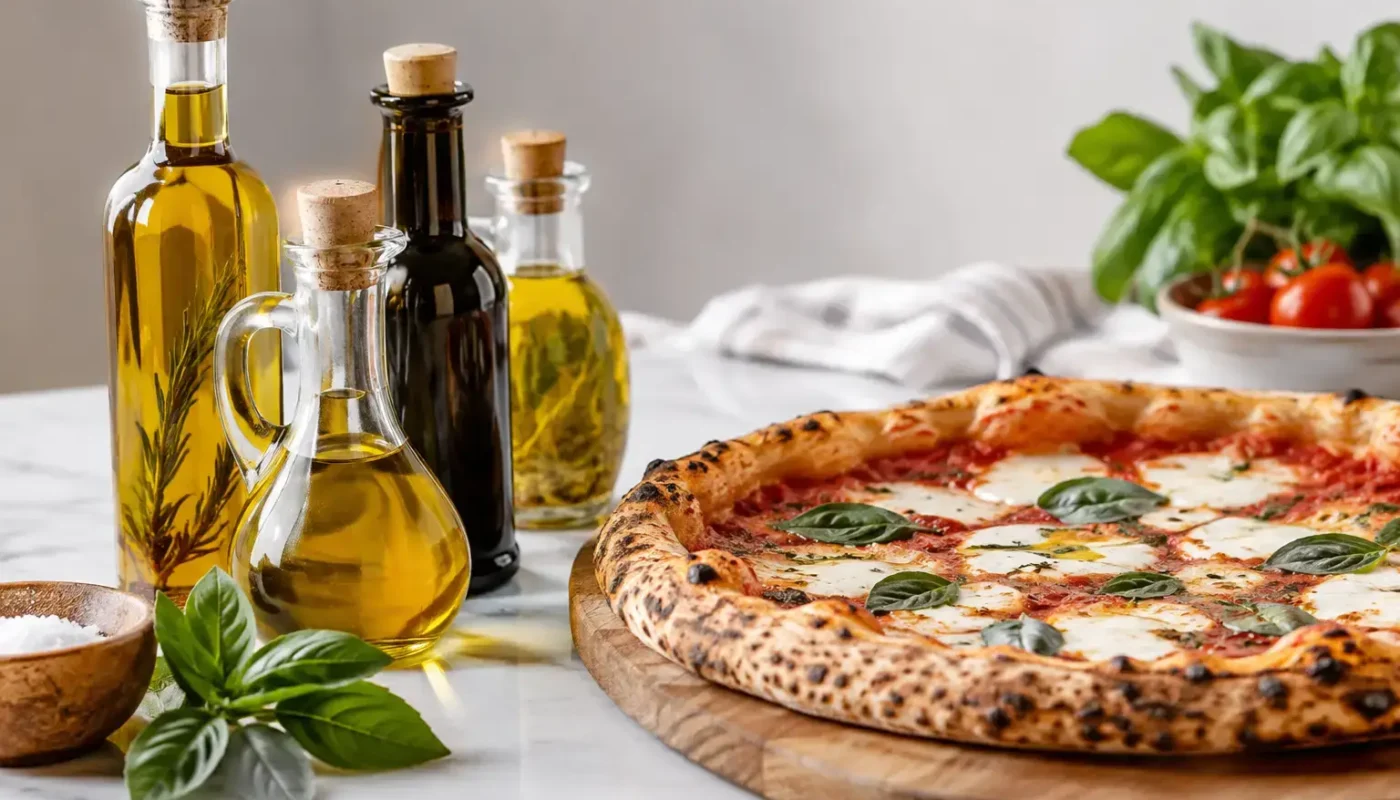
The first brush of oil can decide whether homemade pizza tastes merely good or genuinely memorable. The best oils for homemade pizza bring more than richness: they season the crust, carry the aroma of herbs and garlic, soften the sharpness of tomato, and give every slice a polished finish. The right choice depends on when you use it – in the dough, in the pan, before baking, or as that final fragrant drizzle.
A premium oil deserves the same attention as your flour, mozzarella, and sauce. Fresh extra virgin olive oil is the classic starting point, but it is not the only worthwhile option. Infused oils can make a simple pie feel intentional, while a neutral high-heat oil has a useful role in certain baking setups.
Start With Fresh Extra Virgin Olive Oil
For most home pizzas, fresh extra virgin olive oil is the best all-around choice. Its fruitiness rounds out tomato sauce, its gentle bitterness balances creamy cheese, and its peppery finish adds dimension to vegetables, sausage, and cured meats. A high-quality EVOO should taste lively rather than flat, greasy, or waxy. Depending on its origin and olive variety, you may notice green grass, artichoke, fresh herbs, almond, or ripe fruit.
Use extra virgin olive oil in three places: a modest amount in the dough, a light coating on the pan or pizza steel-adjacent surface as appropriate, and a finishing drizzle after the pizza comes out of the oven. The post-bake drizzle is where a beautiful oil gets its moment. Heat releases its aroma without cooking away the delicate flavors that make it special.
For a Margherita, choose a medium-intensity EVOO with a clean, grassy profile. For mushroom, caramelized onion, or white pizzas, a more assertive, peppery oil can stand up to the deeper flavors. If your family prefers a softer, rounder finish, reach for a mild, buttery oil instead.
The Best Oils for Homemade Pizza by Style
There is no single oil that suits every pie. Think of oil as a seasoning choice, much like selecting basil versus oregano or fresh mozzarella versus low-moisture mozzarella.
Classic cheese and Margherita pizza
A fresh, medium EVOO is the natural partner for tomato, basil, and mozzarella. Brush a little around the exposed edge of the crust before baking if you like a golden, savory rim. Finish with a restrained drizzle after baking, especially if the tomatoes are bright or acidic.
White pizza and roasted vegetable pizza
Garlic-infused olive oil is especially good here. It gives you the warm, savory character of garlic without the risk of raw garlic scorching in a very hot oven. Brush it over ricotta, mozzarella, potatoes, spinach, roasted squash, or mushrooms. If using garlic oil before baking, keep the application light so the crust stays crisp rather than oily.
Spicy pizza
Chili-infused olive oil brings controlled heat and a beautiful red-pepper aroma to pepperoni, sausage, hot honey, or vegetable pizzas. It is usually best added after baking, when you can taste as you go. A few drops can wake up a slice; too much can hide the character of your sauce and cheese.
Mediterranean-inspired pizza
For pies with feta, olives, artichokes, roasted peppers, or chicken, consider a bright lemon-infused olive oil as a finishing touch. Its citrus character provides the lift you might otherwise get from a squeeze of lemon. It is best used sparingly, particularly if your toppings already include briny olives or salty cheese.
Deep-dish, Detroit-style, and pan pizza
These pizzas need an oil that can help create a crisp, well-browned underside. Extra virgin olive oil still works beautifully in a cast-iron or Detroit-style pan, especially if you enjoy its flavor along the edges. For extremely hot or longer bakes, some cooks prefer a refined olive oil, avocado oil, or another neutral oil with a higher smoke point for the pan, then finish the pizza with fresh EVOO for flavor.
That division of labor is practical, not a compromise. Use the oil built for the heat where heat matters most, then use your finest olive oil where its aroma can shine.
Where Oil Belongs on a Pizza
Oil is most effective when it has a job to do. Adding it everywhere can leave a pie heavy, with toppings that slide off and a crust that loses its crackle.
In dough, olive oil contributes tenderness and handling ease. Many lean Neapolitan-style dough formulas skip oil entirely, relying on fermentation, heat, and hydration for their signature texture. That is not wrong – it is simply a different style. If you are making a thinner, high-heat pizza and want a more traditional airy crust, follow your dough recipe rather than adding oil automatically.
On the pan, oil prevents sticking and promotes browning. Use enough to coat the surface, not so much that the dough shallow-fries unless that is the result you want. For sheet-pan pizza, a generous layer of EVOO can be delicious, creating a crisp, almost fried edge with a tender interior.
On the crust, a light brush of oil before baking encourages even color and gives exposed dough a savory finish. Avoid brushing oil over heavily topped areas, where it can pool and interfere with browning.
After baking, treat oil like a finishing salt: a small amount makes a noticeable difference. Drizzle in thin lines over the whole pie, or brush the outer crust for people who love a rich, aromatic edge. If serving guests, place a bottle of quality EVOO on the table alongside crushed red pepper and grated cheese. It invites everyone to tailor a slice to their taste.
Smoke Point Matters, but Flavor Matters More
Home pizza ovens and indoor ovens can run hot, so smoke point is worth understanding. Extra virgin olive oil has a lower smoke point than refined oils, but it is still suitable for many home pizza applications, particularly as a finishing oil and for standard oven temperatures. The practical issue is not simply the number on a chart. It is whether oil is exposed directly to intense heat long enough to smoke, burn, and turn bitter.
If you bake pizza at 450 to 550 degrees in a home oven, use EVOO thoughtfully. Keep it off exposed edges of a bare pan that may scorch, avoid excessive oil beneath very thin dough, and save a portion for after baking. If you are working with a pizza oven that reaches much higher temperatures, do not flood the top of the pie with oil before it goes in. A post-bake drizzle is both safer and more flavorful.
Infused oils deserve the same care. Quality fused or infused olive oils offer vivid flavor, but their aromatic ingredients can taste muted or harsh if they are overcooked. Let the oven handle the pizza; let the finishing oil provide the final expression.
How to Choose a Quality Pizza Oil
The bottle matters. Look for olive oil with a fresh harvest profile, clear sourcing information, and a flavor you would happily taste from a spoon. Extra virgin olive oil is a fresh ingredient, not a permanent pantry decoration. Store it away from heat, light, and air, and use it while the flavor is still bright.
A few practical cues can help you match intensity to your pizza:
- Mild oils suit delicate cheese, seafood, and simple white pizzas.
- Medium oils are versatile for tomato sauce, vegetables, and everyday cheese pizza.
- Robust, peppery oils complement bitter greens, mushrooms, spicy sausage, and deeply roasted toppings.
- Garlic, chili, basil, and lemon oils work best when they echo a flavor already present on the pie.
Taste before you pour. If an oil feels pleasantly peppery at the back of your throat, that can be wonderful on a rich pizza with mozzarella and mushrooms. If it tastes intensely bitter to you, use a lighter hand or pair it with sweeter tomatoes and roasted vegetables.
A Simple Pizza Oil Routine Worth Repeating
For a dependable weeknight pizza, use a medium EVOO in the dough if your recipe calls for it, lightly oil the pan, and brush the bare crust edge before baking. Once the cheese is bubbling and the crust is browned, finish with a few teaspoons of fresh EVOO. Add garlic oil to a white pizza, chili oil to a spicy pie, or lemon oil to a feta-and-vegetable combination.
That small routine gives each bottle a clear purpose and makes flavor experimentation easy. At Weyira Olive Oil & Vinegar, we think the most rewarding pantry discoveries are the ones you can taste immediately, and pizza is an excellent place to begin.
Your next pizza does not need more toppings to taste special. Start with an oil you would enjoy on warm bread, use it with intention, and let the final drizzle carry the aroma all the way to the table.
