
Ultra Premium Olive Oil
12 Raw Honey Uses for a More Flavorful Pantry
Nov
A spoonful of raw honey can do much more than sweeten tea. Its floral aroma, gentle acidity, and lingering finish make raw honey uses especially rewarding for cooks who want pantry staples to bring real character to a dish. One jar can move easily from a warm goat cheese appetizer to a bright vinaigrette, a roasted vegetable glaze, or a weekend baking project.
Raw honey is honey that has generally been minimally processed, with little or no heating and often less filtration than conventional honey. That can preserve more of its natural aroma, pollen, and distinct varietal character. Because standards and handling vary by producer, the label alone does not tell the whole story. Taste, source, and freshness still matter.
1. Build a cheese board with contrast
Raw honey earns its place on a cheese board because it balances salty, tangy, and aged flavors without flattening them. Drizzle it over fresh goat cheese with cracked black pepper, spoon it beside creamy Brie, or pair it with a firm, nutty cheese such as Manchego or aged Gouda.
For a more composed bite, add toasted walnuts, sliced pear, and a few drops of a fruit-forward balsamic vinegar. The key is restraint. A small ribbon of honey should highlight the cheese rather than turn the board into dessert.
2. Whisk it into a polished vinaigrette
Honey helps oil and vinegar come together into a dressing with body and balance. Its natural thickness gives a vinaigrette a lightly emulsified texture, while its sweetness rounds out the sharp edge of vinegar.
Start with three parts extra virgin olive oil to one part balsamic vinegar, then whisk in a teaspoon of raw honey, a pinch of salt, and Dijon mustard if you enjoy a more savory finish. A delicate wildflower honey is lovely with white balsamic and greens, while a darker, fuller honey stands up well to traditional balsamic, roasted beets, and blue cheese.
3. Glaze roasted vegetables
Carrots, winter squash, sweet potatoes, Brussels sprouts, and parsnips all take beautifully to honey. Toss vegetables first with extra virgin olive oil, salt, and pepper, then roast until nearly tender. Add honey during the final 10 minutes so it caramelizes without scorching.
For a bright, restaurant-worthy finish, whisk honey with a little balsamic vinegar and brush it over the vegetables near the end of cooking. A pinch of chile flakes or smoked salt keeps the sweetness in check. This is one of the raw honey uses that proves a simple side dish does not need many ingredients to feel special.
4. Make a savory marinade or finishing sauce
Honey brings color and caramelization to chicken, pork tenderloin, salmon, shrimp, and tofu. It works best when paired with acid and salt, which keep the flavor from reading as candy-sweet. Try raw honey with olive oil, garlic, soy sauce or tamari, fresh ginger, and lemon.
Use it as a brief marinade for proteins, or simmer the mixture separately into a sauce and brush it on during the last few minutes of cooking. If grilling, watch closely. Honey can burn quickly over high direct heat, so move food to a cooler part of the grill once the glaze goes on.
5. Stir it into tea, coffee, and warm drinks
Raw honey is a comforting addition to herbal tea, black tea, coffee, chai, and warm lemon water. Its flavor will come through most clearly when the drink is warm rather than boiling hot. A mild clover-style honey may disappear into bold coffee, while orange blossom or wildflower honey can add a noticeable floral note.
For an easy afternoon drink, combine warm water, fresh lemon, raw honey, and a thin slice of ginger. The proportions depend on your preference, so begin with less honey and adjust. The goal is refreshment, not syrup.
6. Add depth to breakfast favorites
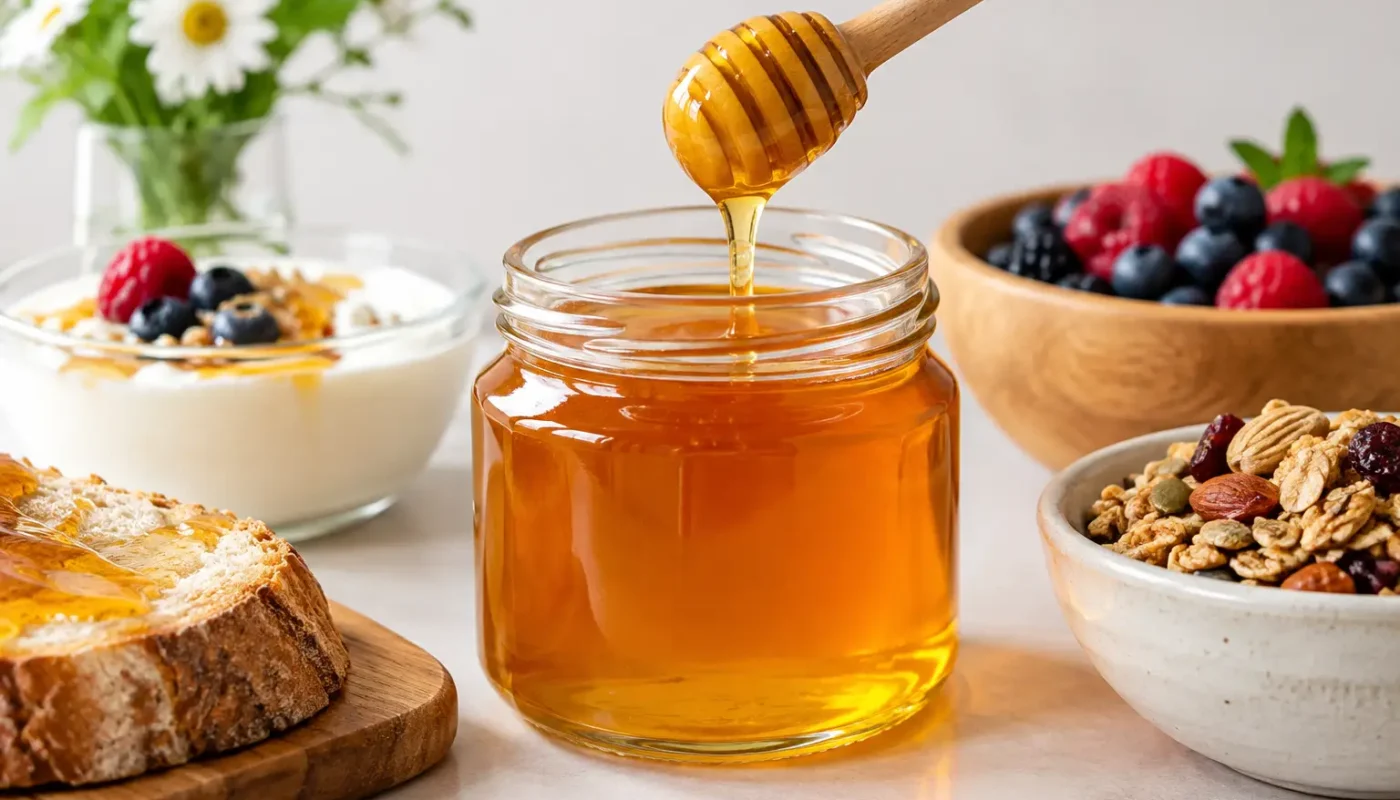
A jar of raw honey belongs near the breakfast table. Spoon it over Greek yogurt with berries and toasted pistachios, swirl it into oatmeal, or drizzle it across ricotta toast with sliced figs. It is equally at home on pancakes and waffles, though a flavorful honey offers more dimension than the one-note sweetness of standard pancake syrup.
Try honey with a pinch of flaky salt over buttered toast, or pair it with olive oil and cinnamon on roasted apples. These small combinations are a good reminder that premium pantry ingredients shine when they are allowed to stay simple.
7. Bake with a little more moisture
Honey contributes moisture, color, and a subtle chew to quick breads, muffins, granola, cookies, and cakes. It is sweeter than granulated sugar, so recipes usually need less of it. Honey also browns faster, which means baked goods may benefit from a slightly lower oven temperature or closer attention near the end of the bake.
When substituting honey for sugar in an existing recipe, it depends on the formula. Start with a trusted recipe designed for honey when possible. For casual baking, replacing part of the sugar rather than all of it is often the safest route, especially in cakes where texture is precise.
8. Balance spicy sauces and dips
A touch of raw honey can make heat more inviting without removing its personality. Blend it into a hot sauce with lime, whisk it into a spicy peanut dressing, or add it to a buffalo-style wing sauce. Honey is particularly good with chipotle, cayenne, harissa, and crushed red pepper because its rounded sweetness lingers beneath the spice.
For entertaining, stir honey into softened cream cheese or whipped feta, then finish with chile crisp and herbs. Serve with crackers, warm pita, or crisp vegetables. It is an easy appetizer with the kind of sweet-salty contrast that makes guests circle back for another bite.
9. Create a memorable cocktail or mocktail
Honey syrup is easier to mix into cold drinks than honey straight from the jar. Stir equal parts honey and warm water until smooth, then cool before using. A lighter honey suits gin, vodka, sparkling water, citrus, and fresh herbs. A deeper honey can complement bourbon, dark rum, apple cider, and warming spices.
In a nonalcoholic drink, combine honey syrup, fresh lemon juice, sparkling water, and a few muddled mint leaves. Add a splash of white balsamic vinegar for a grown-up tartness that makes the drink feel more layered than ordinary lemonade.
10. Use it in a fruit-forward dessert
Raw honey and fruit are natural partners. Drizzle it over grilled peaches, broiled grapefruit, roasted grapes, or fresh berries. Fold it into mascarpone or ricotta for a quick dessert spread, then add citrus zest and toasted almonds.
Honey is also excellent with olive oil cakes, especially when brushed over the warm cake with lemon juice. Choose a honey whose flavor fits the dessert. Delicate honey lets fruit lead, while a darker honey can bring a pleasing molasses-like richness to apples, pears, nuts, and chocolate.
11. Keep a spoonful for simple throat comfort
Many people enjoy honey stirred into warm tea or water when their throat feels dry or scratchy. It coats pleasantly and makes a soothing drink more appealing. This is comfort food, not a substitute for medical care, and honey should never be given to children under 12 months old because of the risk of infant botulism.
If you are managing a health condition or closely monitoring sugar intake, treat honey as a sweetener and use it thoughtfully. Natural does not mean sugar-free, but a flavorful honey can help you use less while still enjoying the taste.
12. Preserve its flavor with smart storage
Store raw honey tightly sealed in a cool, dry cabinet away from direct sunlight. Refrigeration is unnecessary and can encourage crystallization. Crystals are normal, especially in raw honey, and they do not mean the honey has spoiled. To loosen crystallized honey, set the jar in warm water and stir gently. Avoid overheating it if you want to preserve its nuanced aroma.
Use a clean, dry spoon each time. Introducing water or food crumbs can affect quality over time. Honey keeps remarkably well, but its best flavor is enjoyed while its floral notes are still lively.
Let the honey lead the pairing
The best raw honey uses begin with tasting it on its own. Notice whether it is light and citrusy, herbal, buttery, or dark and malty, then pair it accordingly. A beautiful honey is not merely a substitute for sugar. It is an ingredient with a sense of place, ready to bring a little more warmth and distinction to the everyday meals you already love.
