
Fused Extra Virgin Olive Oil
Fused vs Infused Olive Oil Explained
Jul
You can taste the difference almost immediately. A bright lemon olive oil made by crushing fresh olives and lemons together has a vivid, integrated flavor that feels built into the oil itself. An herb oil made by steeping rosemary after pressing can be beautiful too, but it lands differently on the palate. That is the heart of fused vs infused olive oil – two flavored oils that may look similar on the shelf, yet offer distinct flavor, production methods, and best uses in the kitchen.
For home cooks who care about freshness, ingredient quality, and getting the most from every bottle, this distinction is worth knowing. It helps you shop more confidently, pair oils more thoughtfully, and choose the right style for roasting, finishing, dipping, or gifting.
What fused vs infused olive oil actually means
The simplest way to understand fused vs infused olive oil is to look at when the flavoring ingredient meets the olives.
A fused olive oil is made by crushing fresh olives together with fresh whole produce, usually citrus or another fruit, at the same time. The flavors are extracted during the milling process, so the resulting oil has a naturally unified profile. The olive and the flavoring ingredient are not combined later – they are processed together from the start.
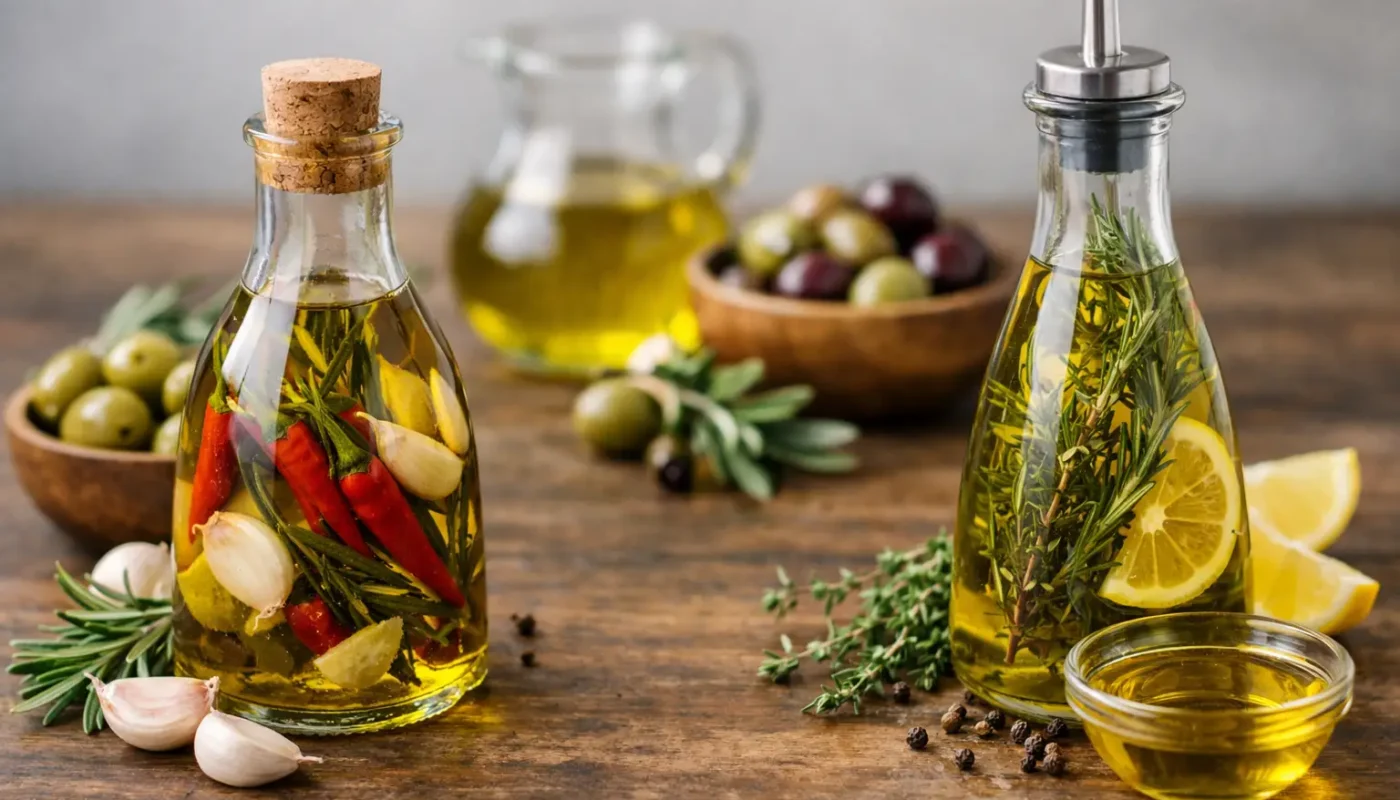
An infused olive oil is made after the olive oil already exists. In this case, flavor is added to finished oil using herbs, spices, peppers, garlic, mushrooms, or other ingredients. That infusion may happen through steeping, natural extracts, or carefully formulated flavor additions, depending on the producer and the ingredient being used.
Both can be delicious. They are simply different products with different strengths.
How fused olive oil is made
Fused olive oils are closely tied to harvest timing and fresh ingredients. To make a fused lemon olive oil, for example, whole fresh lemons are milled with just-picked olives. The same idea applies to orange, blood orange, lime, or other compatible produce.
Because the olives and fruit are crushed together, the flavor tends to feel more seamless and less layered on top. You get the aroma of the added ingredient, but you also get a sense that it belongs to the olive oil rather than sitting outside it. That can make fused oils especially appealing for cooks who want clean, vivid flavor without a heavy or artificial impression.
This method also limits what can be made as a true fused oil. Fresh citrus works beautifully. Many dried spices and herbs do not, simply because they are not handled the same way in the mill. So if you see basil, garlic, rosemary, or chili oils, those are often infused rather than fused.
How infused olive oil is made
Infused olive oils offer more variety because they are created after pressing. A producer starts with quality olive oil, then adds flavor through botanicals, spices, peppers, aromatic ingredients, or natural flavor compounds.
When done well, infused oils can be wonderfully expressive. Garlic can be savory and round, rosemary can feel woodsy and elegant, and chili can bring focused heat without overwhelming the olive oil underneath. The biggest advantage here is range. Infusion allows for flavor profiles that would be difficult or impossible to create through co-milling.
Quality matters a great deal. A premium infused oil should still taste like olive oil first, with a clear, balanced flavor addition. If the added flavor dominates everything or tastes flat, chemical, or harsh, the base oil may not be doing much of the work.
Flavor differences in the bottle and on the plate
If you are deciding between the two, taste is usually the deciding factor.
Fused oils tend to have a more integrated, fresh, and natural character. Citrus fused oils in particular often bring aromatic lift and brightness that feels very true to the fruit. They are excellent when you want a polished finish with very little effort – over grilled fish, roasted vegetables, leafy salads, grain bowls, cakes, or even vanilla ice cream with a good balsamic.
Infused oils tend to be more specific and directional. They can bring herbal depth, peppery heat, garlic punch, or earthy richness in a more pronounced way. That makes them especially useful when you want to steer a dish in a clear flavor direction. A garlic-infused oil can transform simple pasta. A basil oil can wake up tomatoes and mozzarella. A chili oil can add warmth to pizza, eggs, soups, and marinades.
This is not a question of better or worse. It is more about what kind of flavor experience you want. Fused is often elegant and cohesive. Infused is often versatile and expressive.
Which is better for cooking?
It depends on how you plan to use it.
For finishing, fused oils often shine. Their brightness and integrated flavor make them ideal for drizzling at the end, when aroma matters most. Lemon fused olive oil on grilled asparagus or blood orange fused oil on a fennel salad can do more than a squeeze of citrus alone because you get both richness and lift in one ingredient.
For everyday flavor building, infused oils can be extremely practical. Garlic, herb, and chili oils are easy ways to add personality to weeknight cooking without pulling out a dozen ingredients. You can brush them onto bread, use them in vinaigrettes, toss them with roasted potatoes, or whisk them into a quick marinade.
Heat is another point where nuance matters. High-quality olive oil can absolutely be used for cooking, but delicate flavor notes are always more noticeable when an oil is used at lower heat or as a finish. If you are paying for a beautifully aromatic fused citrus oil, you may prefer to save it for applications where that brightness stays front and center.
Freshness, shelf life, and quality concerns
Flavored oils raise good questions about freshness and storage, especially for shoppers who are already paying attention to olive oil quality.
The first thing to look for is the quality of the base oil. Whether fused or infused, the best bottle starts with fresh, well-made olive oil. If the olive oil itself is dull, no added flavor will rescue it.
The next consideration is how the flavor was created. True fused oils and professionally produced infused oils are made with stability and food safety in mind. That matters, especially with ingredients like garlic and herbs. Homemade flavored oils can be risky if they are not prepared and stored correctly, so store-bought bottles from a trusted specialty source are often the better route.
Once opened, keep flavored olive oils tightly sealed, away from heat and light, and use them while the flavor is lively. They are pantry ingredients, but they are not meant to linger forever. Like all premium olive oils, they are best enjoyed fresh.
How to choose the right one for your kitchen
If you love clean, citrusy brightness and want a bottle that can instantly elevate seafood, chicken, vegetables, salads, and baked goods, start with a fused oil. Lemon and blood orange are especially versatile.
If you cook by mood and like building flavor around pasta, bread, grilled meats, eggs, pizza, or roasted vegetables, infused oils may give you more range. Garlic, basil, rosemary, and hot pepper all earn their keep quickly.
A lot of well-stocked kitchens benefit from both. Think of a fused oil as your finishing flourish and an infused oil as your pantry shortcut with personality. They solve different problems, and that is exactly why they are so enjoyable to keep on hand.
Fused vs infused olive oil for pairing and gifting
This is where flavored olive oils become more than a cooking staple. They also create memorable pairings.
Fused citrus oils pair beautifully with white balsamic vinegars, berry vinegars, and lighter dishes that want acidity and freshness. Infused herb or garlic oils often pair well with traditional dark balsamics, hearty vegetables, bread boards, and savory entertaining spreads.
They also make excellent gifts because they feel both useful and a little indulgent. A thoughtfully chosen flavored olive oil invites experimentation without asking someone to learn a complicated technique. That is part of the charm at Weyira Olive Oil & Vinegar – these are ingredients that make everyday meals feel a little more considered.
The best way to think about the difference
The best way to choose between fused and infused olive oil is not to ask which one wins. Ask what you want the oil to do.
If you want flavor that feels naturally woven into the olive oil, fused is likely your match. If you want a wider range of bold, savory, spicy, or herbal profiles, infused gives you more room to play. A good bottle of either should taste intentional, balanced, and vibrant enough to make a simple dish feel special.
That is really the pleasure of flavored olive oil at its best. One pour can change the whole plate – and once you know how each style works, choosing the right bottle becomes part of the fun.
