
Balsamic Vinegar, Dark Balsamic Vinegar, White balsamic vinegar
Best Vinegar for Fruit Salad: What to Use
Jul
A splash of vinegar can make fruit taste more like itself. That sounds backward until you try it. The right acid sharpens sweetness, wakes up aroma, and gives a fruit salad the kind of finish that makes people ask what you added. If you are wondering about the best vinegar for fruit salad, the short answer is this: it depends on the fruit, but lighter, cleaner vinegars usually win.
Most fruit salads do not need much. In fact, the biggest mistake is treating vinegar like a dominant dressing ingredient instead of a quiet balancing note. With ripe strawberries, melon, peaches, pineapple, grapes, or citrus, you want brightness and lift, not a harsh bite. That is why fruit-friendly vinegars tend to be softer, slightly sweet, and aromatic.
The best vinegar for fruit salad starts with balance
Fruit already brings sugar, water, and perfume. Vinegar steps in to add contrast. When the balance is right, strawberries taste deeper, watermelon tastes fresher, and stone fruit tastes more fragrant. When the balance is off, the salad can turn sharp, flat, or oddly pickled.
That is why quality matters so much here. In a savory marinade, a rough vinegar can hide behind garlic, herbs, and salt. In fruit salad, there is nowhere to hide. A premium vinegar with clean acidity and real depth tastes polished in a way a basic grocery bottle often does not.
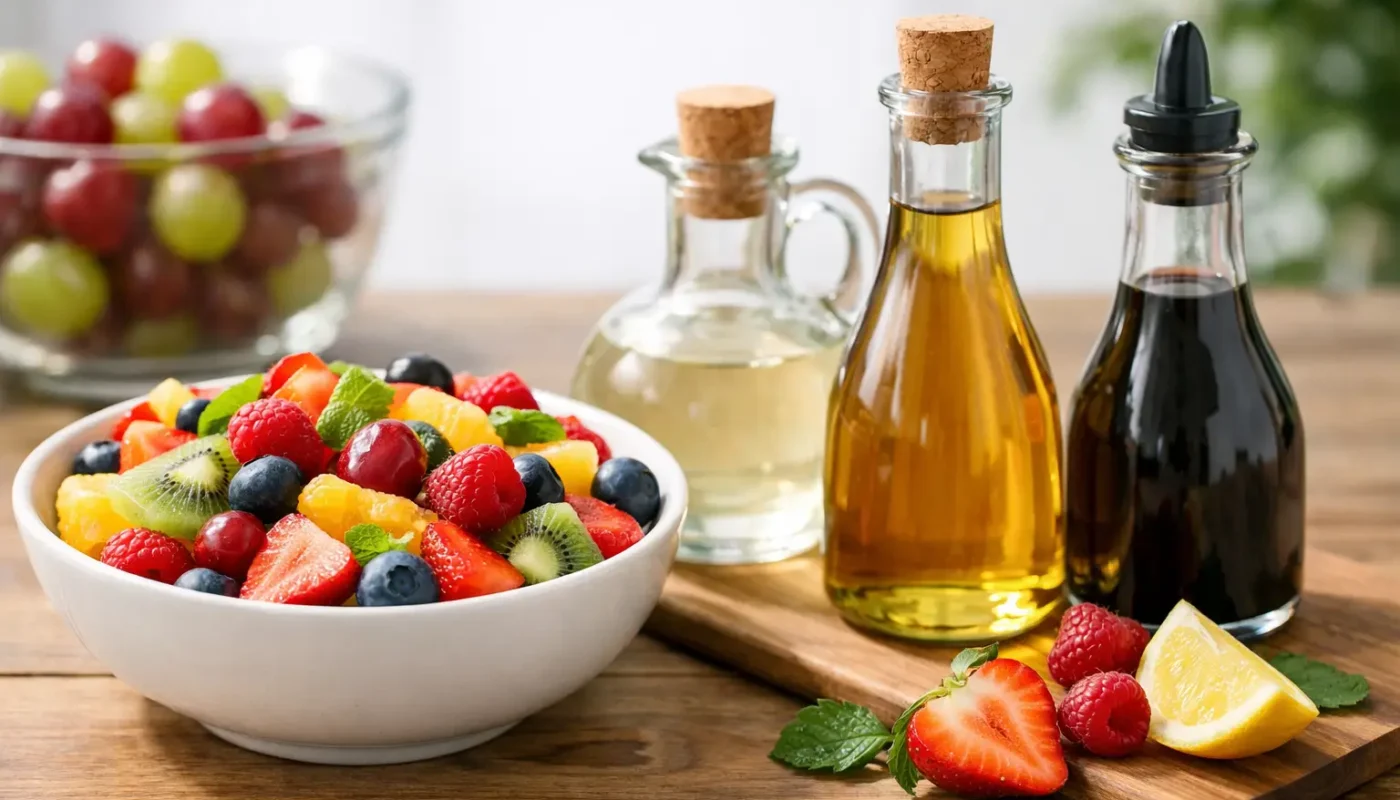
For most bowls of mixed fruit, white balsamic is the easiest recommendation. It has gentle acidity, subtle sweetness, and enough body to coat fruit lightly without darkening it. It also keeps the colors bright, which matters when you have berries, melon, kiwi, or citrus on the table.
White balsamic is usually the best vinegar for fruit salad
If you want one bottle that works across the widest range of fruit, choose white balsamic. It is mellow enough for delicate fruit and complex enough to make a simple bowl taste intentional. You get acidity, but not the aggressive edge that can come from distilled white vinegar or a very sharp wine vinegar.
White balsamic is especially good with strawberries, blueberries, blackberries, peaches, nectarines, pears, apples, mango, and melon. It also plays well with herbs like mint and basil. Add a little honey if the fruit is underripe, or skip extra sweetener if your fruit is at peak season.
Another reason white balsamic stands out is appearance. Dark balsamic can be delicious, but it tints light-colored fruit and can make the salad look muddy if overused. White balsamic keeps things luminous and fresh-looking, which is exactly what most people want from a fruit platter or brunch salad.
When dark balsamic works beautifully
Dark balsamic has a place, just not in every fruit salad. Its deeper sweetness and richer flavor are wonderful with strawberries, figs, cherries, plums, and roasted fruit. If your salad leans dark and lush rather than bright and delicate, a small drizzle can be stunning.
The key is restraint. Dark balsamic can quickly take over softer fruits like melon or pineapple. It can also make a mixed fruit bowl taste more like dessert than a fresh side. That may be perfect for some occasions, especially with vanilla, black pepper, or mascarpone nearby, but it is not the most universal choice.
Champagne vinegar and apple cider vinegar
Champagne vinegar is another excellent option when you want a lighter touch. It is crisp, elegant, and less sweet than balsamic, so it works best when your fruit is very ripe and naturally flavorful. Think berries in midsummer, sliced peaches, or citrus segments with fresh mint.
Apple cider vinegar can work too, especially with apples, pears, stone fruit, and fall-inspired salads. Its fruity profile feels natural, but it usually needs a careful hand. Some versions are a little too assertive or cloudy in flavor for delicate fruit. If you use it, keep the amount small and consider rounding it out with honey or a splash of orange juice.
Vinegars that are usually too strong
Not every vinegar belongs in fruit salad. Red wine vinegar is often too bold and savory. Standard white vinegar is too sharp for this kind of use. Sherry vinegar can be beautiful in savory fruit dishes with nuts or cheese, but in a fresh fruit salad it can read heavy unless the rest of the ingredients are equally rich.
Rice vinegar is mild, but many bottles are quite neutral and may not add much beyond acidity. It is not a bad choice, but it rarely creates the layered, gourmet finish that a good white balsamic or champagne vinegar can deliver.
How to match vinegar to the fruit
Think about the fruit’s personality before you reach for the bottle. Delicate, watery fruits like watermelon, honeydew, and cantaloupe want a gentle vinegar. White balsamic is ideal here because it brightens without fighting the fruit.
Berries can handle a little more character. Strawberries in particular are famous with balsamic for a reason. Their sweetness, perfume, and slight tartness pair naturally with both white and dark balsamic, depending on the mood you want. White feels fresh and clean. Dark feels richer and more dessert-like.
Stone fruits like peaches, plums, nectarines, and cherries are flexible. White balsamic is the safer all-around choice, while dark balsamic suits ripe cherries or grilled peaches beautifully. Apples and pears often do well with white balsamic or a soft apple cider vinegar. Tropical fruits like mango and pineapple shine with white balsamic, and they can also handle a citrus-based dressing if you want extra brightness.
Citrus salads are their own category. If the bowl is mostly oranges, grapefruit, and segments of tangerine, champagne vinegar can be excellent because it keeps the flavor clean. White balsamic also works if you want a slightly rounder finish.
How much vinegar to use in fruit salad
Less than you think. For a medium bowl of fruit, start with 1 to 2 teaspoons of vinegar, then toss and taste. You are not trying to dress leafy greens. You are trying to season fruit.
If you add sweetener, use just enough to support the acidity. Honey pairs especially well with white balsamic and berries. Maple syrup can be nice with apples, pears, and autumn fruit. Sometimes the fruit is sweet enough that all you need is the vinegar and maybe a pinch of flaky salt to make flavors pop.
A little olive oil can work in certain fruit salads too, especially those served with cheese, nuts, or herbs. A delicate extra virgin olive oil gives the salad a more composed, almost restaurant-style finish. But for a simple bowl of breakfast or brunch fruit, it is usually optional.
A simple formula that works
For most fruit salads, combine a teaspoon or two of white balsamic with a touch of honey and a few torn mint leaves. Toss gently and let it sit for five to ten minutes. That short rest helps the fruit release a little juice and mingle with the dressing without becoming soggy.
If you are serving the salad later, hold the dressing until closer to serving time. Acidity draws out moisture, and some fruits, especially strawberries and melon, can soften if they sit too long.
What makes premium vinegar taste better here
Fruit salad is one of the clearest places to notice the difference between a specialty vinegar and an ordinary one. Better vinegar tastes less one-dimensional. The acidity feels integrated rather than sharp, and the flavor lingers in a pleasant way instead of hitting the palate all at once.
That matters because fruit does not offer much cover for flaws. When you use a thoughtfully made white balsamic or a beautifully balanced dark balsamic, the result tastes refined with almost no effort. It is the sort of small upgrade that makes home entertaining feel polished.
For people who enjoy exploring flavor, this is also a fun place to play with pairings. A white balsamic with citrus notes can flatter melon and berries. A richer balsamic can turn strawberries and cherries into a simple plated dessert. Shops like Weyira Olive Oil & Vinegar build their collections around these kinds of flavor moments, where one ingredient changes the whole experience.
The real answer to the best vinegar for fruit salad
If you want the most versatile answer, go with white balsamic. It is gentle, bright, lightly sweet, and easy to pair with nearly every kind of fruit. If your salad leans darker, richer, or more dessert-like, dark balsamic can be beautiful in a smaller dose. And if your fruit is especially ripe and you want a crisp, understated finish, champagne vinegar is a smart choice.
The best bowl is not the one with the most ingredients. It is the one where each element tastes clearer, fresher, and more alive. A good vinegar does exactly that, quietly and beautifully. Next time your fruit looks sweet but tastes a little flat, a small splash may be the thing that brings it all the way into focus.
