
Ultra Premium Olive Oil
A Guide to Flavored Olive Oils for Better Meals
Aug
A well-chosen flavored olive oil can make a Tuesday-night dinner taste like it received far more attention than it did. A drizzle of bright lemon oil wakes up roasted asparagus; garlic oil turns a plain pot of pasta into something inviting; a fresh basil oil makes sliced tomatoes feel complete. This guide to flavored olive oils will help you choose with confidence, cook with better flavor, and keep each bottle at its best.
What Makes Flavored Olive Oil Different?
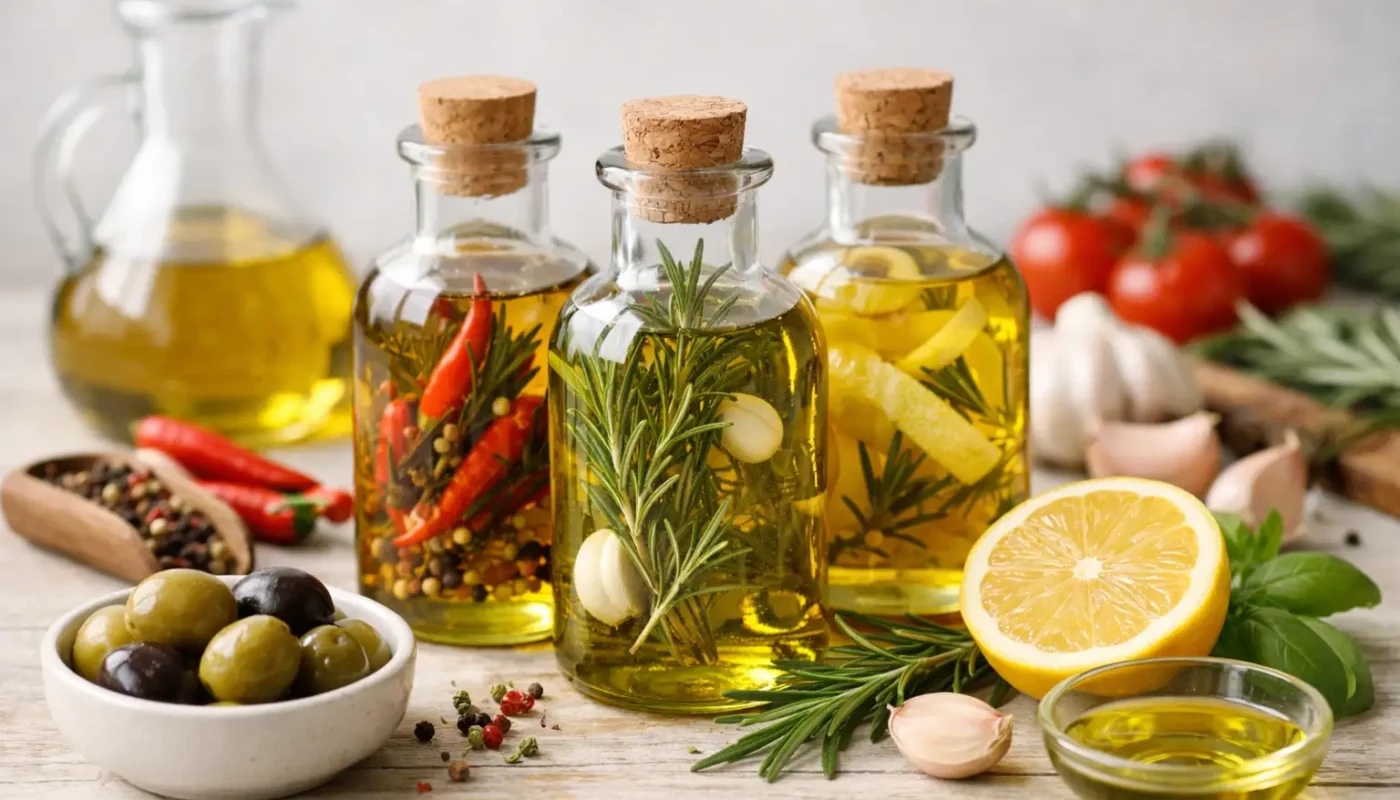
Flavored olive oil begins with quality olive oil, then gains character through one of two approaches: fusing or infusing. The distinction is useful, although the most important question is always how the oil tastes in your kitchen.
Fused oils are made by crushing olives and fresh ingredients together at the mill. Whole lemons, blood oranges, limes, herbs, chiles, or other ingredients may be milled with the olives, allowing their essential oils to become part of the finished oil. The result often has an especially integrated, vivid flavor. A fused lemon olive oil, for example, can taste zesty and fragrant rather than simply oily with lemon added.
Infused oils start with finished olive oil. Natural botanical extracts, herbs, spices, peppers, or other flavorings are introduced to create a consistent profile. This method is particularly useful for flavors such as garlic, rosemary, Tuscan herb, and smoky chipotle. A thoughtfully made infusion should still let the olive oil feel present on the palate, not bury it under a harsh or artificial taste.
Neither style is automatically better. A fused citrus oil may be the natural choice for seafood, baking, and vinaigrettes, while an infused garlic or herb oil may earn its place beside the stove. Treat them as different tools in a flavorful pantry.
A Guide to Flavored Olive Oils Starts With Taste
The most memorable flavored oils smell clean, taste balanced, and finish without an unpleasant oily heaviness. Before choosing a bottle, think about the foods you cook most often rather than chasing every flavor at once.
Citrus oils are among the easiest place to begin. Lemon, lime, and blood orange olive oils bring lift to chicken, fish, grilled vegetables, grain salads, and marinades. They also make a beautiful substitute for some of the butter or neutral oil in cakes, quick breads, and olive oil cookies. Lemon is crisp and versatile; blood orange is softer, sweeter, and especially lovely with chocolate or fennel.
Herb-forward oils offer savory convenience. Basil olive oil belongs with tomatoes, mozzarella, white beans, and fresh bread. Rosemary oil adds a piney, aromatic note to potatoes, lamb, focaccia, and roasted squash. Tuscan herb blends tend to be broader and more savory, often with garlic, oregano, basil, and other familiar Mediterranean notes. They are a dependable choice when you want to build flavor quickly in soups, sauces, or sheet-pan dinners.
Garlic oil is a kitchen workhorse, but it should taste rounded rather than aggressively sharp. Use it to start a sauté, toss it with warm pasta, brush it on pizza crust, or finish mashed potatoes. For cooks who love heat, jalapeño, harissa, chipotle, or cayenne oils can add controlled spice to tacos, eggs, chili, roasted corn, and grilled meats. Start with a small amount. You can always add more, but heat concentrates quickly when oil is reduced or used in a sauce.
When shopping, look for clear flavor descriptions and a retailer that treats freshness as seriously as flavor. Premium olive oil should have a clean aroma and a lively palate. Weyira Olive Oil & Vinegar selects oils for the kind of tasting experience that helps home cooks understand those differences firsthand.
Pair Flavored Oils With Acidity and Texture
A flavored oil becomes far more useful when it has a good partner. Balsamic vinegar, fresh citrus, wine vinegar, tomatoes, yogurt, cheese, and even a pinch of salt can sharpen and round its flavor. The goal is balance, not a complicated formula.
Lemon olive oil and a white balsamic vinegar make an easy dressing for arugula, shaved Parmesan, and grilled chicken. Basil oil paired with a dark balsamic vinegar is a classic match for caprese salad, but it is equally good over peaches and burrata. Garlic oil and a traditional dark balsamic can bring depth to roasted mushrooms or a warm lentil salad.
Fruitier flavored oils invite a little playfulness. Blood orange oil with a dark berry or chocolate-style balsamic is appealing over fruit, vanilla ice cream, or a simple olive oil cake. Persian lime oil pairs beautifully with cilantro, avocado, shrimp, and white balsamic vinegar. A chili oil benefits from something cooling or sweet, such as honey, yogurt, mango, or a rich dark balsamic glaze.
Texture matters, too. Finish creamy foods with a bright oil to keep them from tasting flat. Add herb oil to crisp bread crumbs for a fragrant topping. Use citrus oil on grilled vegetables, where char and acidity create a satisfying contrast. A bottle is more likely to become a staple when it solves a familiar dinner problem.
Should You Cook With Flavored Olive Oil?
Yes, with some judgment. Most flavored olive oils are excellent for low- to medium-heat cooking, sautéing, roasting, and grilling. Garlic oil can be a smart starting fat for vegetables or pasta sauce, while rosemary oil is lovely brushed on chicken, potatoes, or flatbread before roasting.
For very high-heat searing, a plain refined oil or an olive oil selected specifically for high-heat use may be more practical. High heat can mute delicate citrus and herb aromas, which is why many cooks save those oils for finishing. Add lemon oil after grilled fish comes off the heat, stir basil oil into soup just before serving, or drizzle harissa oil over a finished bowl of beans.
Baking is another rewarding use. Citrus oils are especially effective in recipes where olive oil is welcome, such as cakes, muffins, scones, and shortbread. Replace part or all of the recipe’s oil with flavored olive oil only when the flavor makes sense. Lemon oil can brighten a blueberry loaf; chipotle oil is probably not the answer for a vanilla cupcake.
Keep Every Bottle Fresh
Flavored olive oil is best enjoyed while its aroma is expressive and its flavor feels alive. Heat, light, and oxygen are its enemies, so store bottles tightly sealed in a cool, dark cabinet, away from the stove and sunny windows. A dark glass or opaque container offers added protection.
Do not save a special bottle indefinitely. Once opened, use it regularly and let the flavor guide you. If an oil smells waxy, stale, or oddly flat, it has likely passed its prime. Buying a bottle size that fits your cooking habits is often wiser than buying the largest size available.
Avoid adding fresh garlic, herbs, or chiles to a bottle at home for long-term storage. Fresh ingredients in oil require careful food-safety handling. Choose professionally prepared flavored oils for dependable flavor and peace of mind, then add fresh herbs directly to the dish when you want an extra burst of aroma.
Build a Small, Useful Collection
You do not need a crowded shelf to cook creatively. Start with one bright citrus oil, one savory herb or garlic oil, and one bolder option such as chipotle or jalapeño. That trio can cover weeknight vegetables, salad dressings, pasta, marinades, grilled foods, and simple finishing drizzles.
As your palate develops, choose the next bottle based on what you actually reach for. If you cook seafood and salads, lime or lemon may disappear quickly. If you bake and entertain, blood orange can be surprisingly versatile. If roasted vegetables are a household constant, rosemary or garlic may become the bottle you replace first.
The best flavored olive oil is not the one reserved for a special occasion. It is the one that makes you taste a spoonful of soup, a salad, or a warm piece of bread and think, just before serving, that this could use one more generous pour.
