
Ultra Premium Olive Oil
Fused Versus Infused Olive Oil Explained
Nov
A bright lemon olive oil can make a simple piece of grilled fish taste finished. A rosemary oil can turn roasted potatoes into something guests ask about. Yet the words on the bottle matter more than many cooks realize. In the fused versus infused olive oil conversation, the difference comes down to when flavor meets the olive oil – and that choice shapes aroma, intensity, and the way an oil performs in your kitchen.
Both styles belong in a flavor-forward pantry. Neither is automatically better. The right bottle depends on whether you want the vivid, integrated character created during milling or a more focused botanical note added after the oil is made.
Fused Versus Infused Olive Oil: The Real Distinction
Fused olive oil is made by crushing fresh olives and another fresh ingredient together. Most commonly, that ingredient is citrus fruit, such as lemons, blood oranges, limes, mandarins, or grapefruits. The olives and fruit go through the mill at the same time, allowing their essential oils and aromas to mingle from the beginning of the production process.
You may also hear this method called agrumato, an Italian term associated with olives pressed alongside citrus. The result is not simply olive oil with lemon flavor added later. It is an oil whose fruitiness, peppery olive character, and citrus perfume are woven together. A well-made fused lemon olive oil often smells like you just twisted a strip of lemon peel over a fresh pour of extra virgin olive oil.
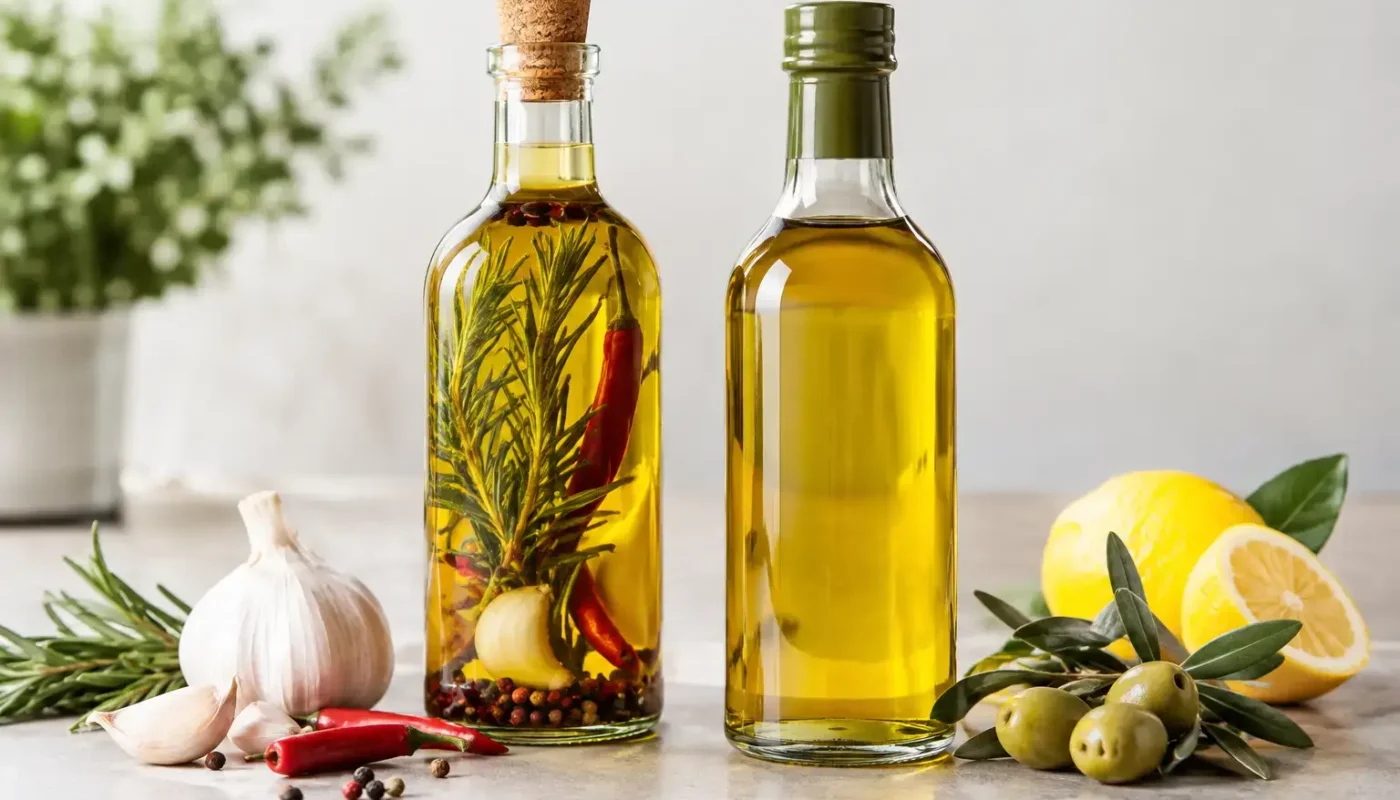
Infused olive oil begins with finished olive oil. Herbs, spices, chiles, garlic, truffle, citrus, or natural flavor components are introduced afterward to bring a particular flavor into the oil. Depending on the producer and ingredient, this may involve steeping botanicals, using extracts, or another carefully controlled flavoring process.
That does not make infused oil a lesser product. It simply creates a different flavor experience. An infused basil oil can offer a clean, recognizable basil note. A garlic olive oil can bring savory depth without requiring chopping or sautéing garlic. The base oil still matters enormously, but the flavor is more clearly layered onto it rather than developed alongside the olives at the mill.
Why the label is worth reading
The terms are not used with perfect consistency across every producer. A label that says “citrus olive oil” does not, by itself, confirm how it was made. Look for language such as “crushed with fresh lemons” or “fused with whole blood oranges” if the production method is important to you. For infused oils, a thoughtful producer should be able to communicate the base oil and the flavor approach used.
Freshness matters in both categories. A beautiful flavor cannot rescue tired, stale oil. Seek oils that smell lively and clean, are stored away from heat and light, and taste balanced rather than waxy, flat, or greasy.
How Fused and Infused Oils Taste on the Plate
Fused oils tend to feel especially unified. With citrus versions, the olive fruit and bright zest arrive together, often with a rounder, more natural impression than a flavor that sits separately on the palate. That makes fused oils wonderful when you want an ingredient to do more than one job: add richness, acidity-like lift, and aroma in a single pour.
Try fused lemon olive oil over grilled shrimp, asparagus, chicken cutlets, or a bowl of white beans. Blood orange fused olive oil is particularly good with fennel, beets, carrots, chocolate desserts, and salads dressed with a dark balsamic vinegar. Lime fused oil brings a fresh edge to fish tacos, corn, avocado, and black bean dishes.
Infused oils can be more direct and targeted. A rosemary olive oil makes an easy finishing touch for lamb, focaccia, mushrooms, or roasted squash. Garlic oil adds immediate warmth to pasta, bread, potatoes, and sautéed greens. Chipotle or jalapeño oils offer controlled heat for pizza, eggs, grilled vegetables, and marinades.
This clarity is useful when you are building a recipe around a specific flavor. If your dish needs rosemary, an infused rosemary oil brings rosemary. If it needs a bright, sunlit citrus character that feels inseparable from the oil itself, a fused citrus oil may be the more satisfying choice.
Pairings that make the difference clear
A quick side-by-side tasting is one of the best ways to understand these oils. Pour a small amount into two cups, warm each cup in your hands, and smell before tasting. Then try them with plain bread, fresh mozzarella, or a simple salad.
For an easy dinner-party pairing, serve fused lemon olive oil with a crisp white balsamic vinegar for a clean vinaigrette. Pair a garlic infused olive oil with a rich traditional-style dark balsamic for a deeper, more savory dressing. These combinations are not rules. They are starting points that make it easier to taste what each oil brings to the table.
Cooking With Flavored Olive Oils
Both fused and infused olive oils can be used for cooking as well as finishing, provided you choose a quality olive oil and match the heat to the dish. Gentle sautéing, roasting, baking, and grilling are all excellent uses. Still, aromatic compounds are delicate. A long, high-heat cook can soften the citrus, herb, or spice notes that made you reach for that bottle in the first place.
Use a fused citrus oil in a cake or quick bread when you want fragrance throughout the crumb. Brush it on seafood or vegetables near the end of cooking for a fresher expression. Use garlic or herb-infused oil to begin a skillet sauce, then finish with another small drizzle just before serving. That final touch restores the aroma and makes the flavor feel intentional.
For salad dressings, think about balance. Citrus fused oils often pair beautifully with milder vinegars, while garlic, herb, and chile-infused oils can stand up to aged dark balsamics. Taste before adding salt. A flavorful oil can reduce the need for extra seasoning, especially in simple dishes.
Quality, Nutrition, and Storage
The healthful character of olive oil begins with the oil itself. Its monounsaturated fats and naturally occurring antioxidant compounds vary with olive variety, harvest timing, freshness, and production practices. A flavored olive oil can be a delicious way to use olive oil more often, but the words fused or infused do not guarantee a particular polyphenol level or nutritional advantage.
Choose based on flavor, ingredient transparency, and the quality of the underlying olive oil. At Weyira Olive Oil & Vinegar, tasting-gallery style variety makes it easier to keep a few distinct bottles on hand: one lively citrus oil, one savory herb or garlic oil, and perhaps one with a little heat. That small range can change weeknight cooking without filling the pantry with single-use ingredients.
Store every bottle tightly capped in a cool, dark cabinet, away from the stove and sunny windows. Buy a size you can enjoy while it is fresh. If an oil smells dull, crayon-like, or stale, its best cooking days are behind it.
A brief food-safety note applies to home experiments: do not store fresh garlic or herbs submerged in oil at room temperature. Commercially produced flavored oils are made under controlled conditions, but homemade garlic-herb oils require careful refrigeration and short storage. When in doubt, make a small batch and use it promptly.
Which Bottle Should You Choose?
Choose fused olive oil when you love citrus and want an especially integrated, fresh-fruit character. It shines in seafood, vegetables, vinaigrettes, desserts, and any dish that benefits from brightness without reaching for a lemon wedge.
Choose infused olive oil when you want a clear savory cue – garlic for pasta, basil for tomatoes, rosemary for roasts, chile for heat, or truffle for an indulgent finish. It is also the practical choice when you want to add a particular flavor quickly and consistently.
For gifting, a paired set is often more memorable than choosing one style alone. A fused citrus oil and a complementary balsamic feel festive and versatile, while an herb or garlic-infused oil gives a confident home cook an immediate new dinner idea. Include a favorite recipe on the card, and the gift becomes an invitation to taste rather than another item on the shelf.
The most rewarding way to choose is to let the meal lead. Keep a fused oil nearby for the dishes that need lift, and an infused oil for the dishes that need depth. One good pour can turn an ordinary plate into the reason everyone lingers at the table.
