
Ultra Premium Olive Oil
Cruet Material Comparison for Oil and Vinegar
Oct
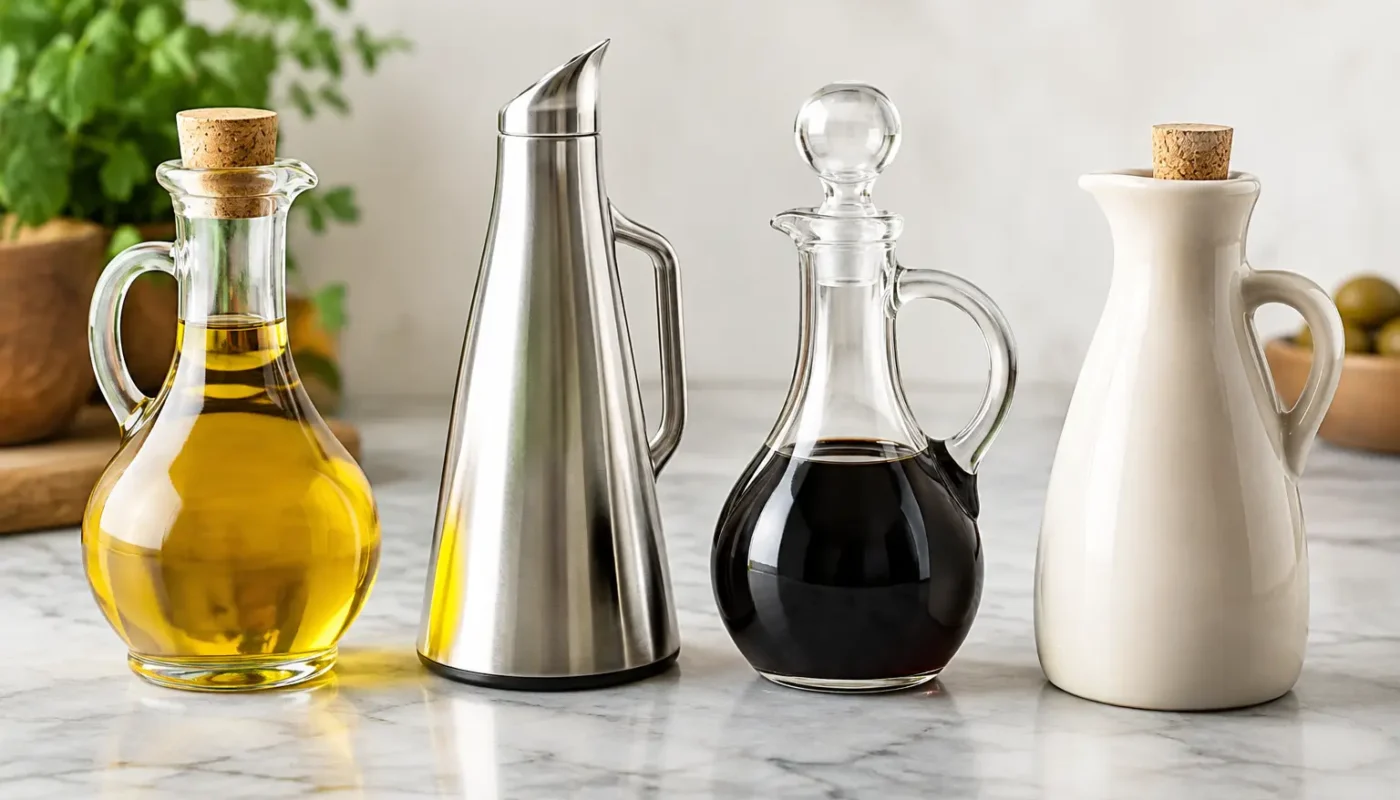
A beautiful bottle on the counter can make even a simple salad feel more intentional. But a thoughtful cruet material comparison is about more than looks. The vessel holding your extra virgin olive oil or balsamic vinegar affects light exposure, pouring control, cleanup, storage habits, and, ultimately, how long each ingredient tastes as vivid as it should.
For a pantry built around fresh olive oil and expressive vinegars, the best cruet is rarely a one-material-fits-all answer. Olive oil is sensitive to light, heat, and oxygen. Vinegar is far more stable, but its acidity changes which materials make sense. Your serving style matters, too: a cruet used tableside has different demands than a bottle kept beside the stove for nightly cooking.
Cruet Material Comparison: What Matters Most
Before choosing glass, ceramic, stainless steel, or plastic, consider what the cruet needs to do. Is it a small vessel for finishing a dish at the table? A working bottle you refill every week? A gift-worthy piece for an olive oil and balsamic tasting? These uses call for different strengths.
For olive oil, protection from light is the central concern. Light speeds oxidation, gradually flattening fresh green, peppery, buttery, or fruity notes. Heat and air matter as well, which is why a tightly fitting stopper and a sensible storage spot are just as valuable as the material itself. No elegant cruet can preserve oil indefinitely if it sits in direct sun or beside a hot range.
For vinegar, material compatibility and easy cleaning move higher on the list. Quality balsamic vinegar, especially a dense dark balsamic or brightly flavored white balsamic, can leave residue around a spout. A design that pours neatly and comes apart easily will make you more likely to enjoy it often.
Glass Cruets: Best for Seeing What You Serve
Glass is the classic choice for good reason. It is nonreactive, does not hold onto aromas, and lets you see the oil or vinegar inside. That visibility is helpful when you are serving two infused oils, comparing a white balsamic with a dark balsamic, or simply monitoring when a refill is due.
Clear glass has one real limitation for olive oil: it offers very little light protection. It is best reserved for a small quantity that will be used quickly, such as a dinner-table cruet filled before entertaining. Keep the remaining olive oil in its original dark bottle or tin, then refill the glass cruet as needed. This approach gives you the visual appeal of glass without leaving your best oil exposed for weeks.
Dark green, amber, or smoked glass is a stronger everyday option. It reduces light exposure while preserving many of glass’s practical benefits. Even then, store it in a cabinet or away from a sunny windowsill. Dark glass is protection, not permission to ignore storage conditions.
Glass is especially well suited to vinegar. Its neutral surface preserves the character of a rich traditional-style balsamic as faithfully as a crisp citrus or herb-infused white balsamic. Choose a model with a wide enough opening to wash thoroughly, since narrow-necked decorative bottles can be frustrating after repeated use.
Ceramic Cruets: Excellent Light Protection With Table Appeal
Ceramic has a warm, artisan presence that suits an elevated kitchen or a thoughtfully set table. A fully glazed ceramic cruet blocks light completely, making it an excellent choice for extra virgin olive oil. It also keeps the bottle’s contents discreet, which can be an advantage when you prefer a clean, uncluttered countertop.
The key word is glazed. Food-safe glaze creates a smooth, nonporous barrier between the liquid and the ceramic body. With a well-made, fully glazed cruet, olive oil and vinegar can both be served confidently. Avoid chipped, cracked, or poorly finished pieces, especially for vinegar, because acidic liquids are best kept against an intact food-safe surface.
Ceramic’s main trade-off is visibility. You cannot see how much oil remains, and you cannot easily inspect the interior for residue. A small cruet helps solve both problems. Refill it more often, wash it regularly, and you will enjoy the benefits of a beautiful opaque vessel without turning it into long-term storage.
Ceramic can also be heavier and more breakable than it appears. Look for a comfortable handle or a shape that feels secure in the hand. The finest pour spout is not useful if the bottle feels awkward while you are dressing roasted vegetables or finishing a bowl of soup.
Stainless Steel: The Workhorse for Fresh Olive Oil
For olive oil lovers, stainless steel is often the most protective everyday material. It blocks light completely, is durable, and has a clean, professional feel. A quality food-grade stainless steel cruet can be ideal near a cooking station, provided it is not parked directly beside high heat.
Stainless steel is particularly appealing if you buy fresh premium olive oil and want to preserve its lively flavor between meals. Because you cannot see the contents, choose a manageable size and refill from the original container rather than pouring a large supply into the cruet. Smaller refills mean the oil is used while its aromas and peppery finish are still at their best.
Not every stainless steel vessel is equally convenient. Some narrow-necked models are difficult to clean or dry completely. Water left behind can compromise oil, so wash only when empty and allow the cruet to air-dry fully before refilling. A wide-mouth design, removable spout, and secure cap make ownership much easier.
Stainless steel can hold vinegar, but it is not always the most appealing choice for it. Vinegar is acidic, and while good food-grade stainless steel is generally suitable, glass or glazed ceramic lets you see the product and monitor the bottle more easily. If you use one stainless cruet exclusively for oil, that is often the simplest and most flavorful arrangement.
Plastic Cruets: Useful, With Clear Limits
Food-safe plastic cruets are lightweight, inexpensive, and hard to break. They can make sense for outdoor dining, picnics, busy family kitchens, or a casual barbecue station where a glass bottle would be a worry. Squeeze bottles also offer excellent control for drizzling oil over pizza, grilled vegetables, or a finished platter.
Still, plastic is not the first choice for storing premium olive oil over time. Plastic can be more permeable than glass, ceramic, or stainless steel, and quality varies widely. It may also retain aromas, particularly when used with garlic-infused oil, chili oil, or strongly flavored vinegars. Use it for short-term serving and frequent refills rather than as a permanent home for a special harvest oil.
If plastic is the right fit for your routine, select a BPA-free, food-safe bottle intended for oils or condiments. Keep it away from heat and sunlight, and replace it if it becomes cloudy, scratched, stained, or difficult to clean.
Choose the Spout as Carefully as the Vessel
Material sets the foundation, but the pouring mechanism shapes the daily experience. An open spout gives a quick, generous pour but exposes the contents to more air and can attract dust. A capped spout offers better protection and is a smart choice for oil that sits out between uses. A stopper-style top is often the easiest to clean, though it may not provide the same precision as a narrow pourer.
For balsamic vinegar, seek a spout that does not drip. Thick dark balsamics can cling to the neck, while white balsamics may pour faster than expected. A small, controlled opening keeps your countertop clean and your salad from becoming overdressed.
Whatever material you choose, avoid topping off old residue with fresh oil or vinegar. Empty the cruet, wash it, dry it completely, and then refill. This small habit protects the bright, pure character you paid for.
The Best Pairing for Most Kitchens
A practical two-cruet setup works beautifully for many home cooks: an opaque ceramic or stainless steel cruet for extra virgin olive oil, plus a glass or glazed ceramic cruet for balsamic vinegar. It gives olive oil the light protection it needs while making vinegar easy to identify, pour, and enjoy.
If you prefer one matching set for the table, dark glass or glazed ceramic offers an elegant middle ground. Keep the vessels small, refill them often, and store your main supply properly. That way, every drizzle of olive oil and every ribbon of balsamic tastes like an invitation to make the next bite more interesting.
